Photo : VascoPlanet — CC BY 2.0, Wikimedia Commons
The oases and the Western Desert · Dakhla
Al-Qasr
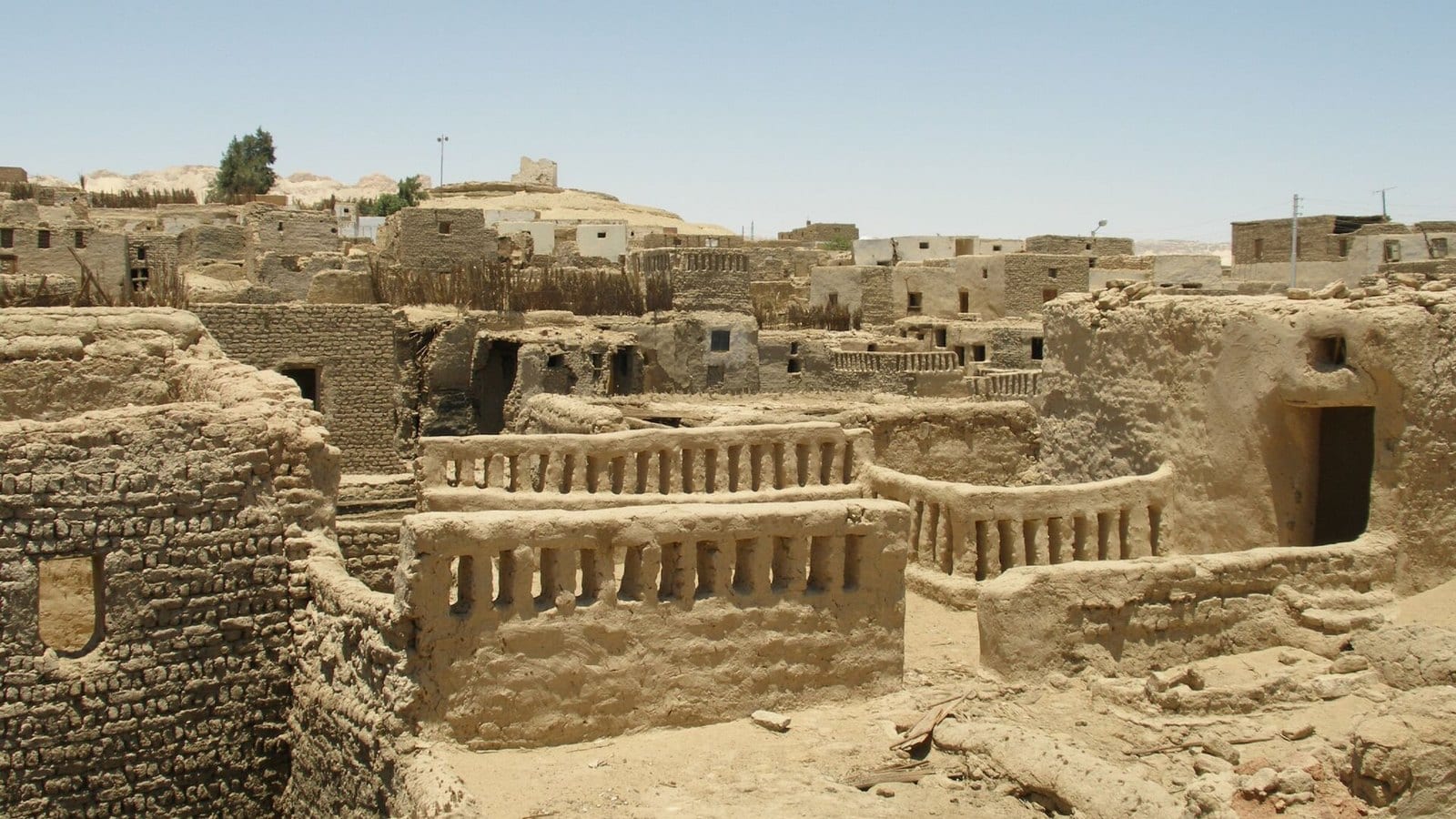
A medieval mud-brick town: covered lanes, dated door lintels, a minaret and a grain mill.
Al-Qasr sits on a rise on the northern side of the Dakhla depression: an Islamic-era town of mud brick, on ground already lived on under the Romans — reused ancient blocks show up in some of the walls. The houses go up two or three storeys and meet overhead, turning the lanes into dark corridors; that is how the town holds off the sun and the sand. Above the doors, carved acacia lintels carry a formula, a name and a date, which gives you the century of the house. It held everything needed to live without stepping outside: a school, a court, a grain mill, a forge, and a minaret usually given as Ayyubid. Families moved down to the new village over the years, and part of the old fabric is now propped up with timber.
The extra bit
Take a torch: the covered lanes and the inside of the mill are pitch dark at midday, and that is where the detail is. Ask someone to read a lintel out to you — the carved date places the house, and door by door you follow how the quarter grew.
Know before you go
The ground is uneven, no two steps are alike and the lintels are low: you stoop often, and neither a wheelchair nor a pushchair gets through. The site ticket and the guide's fee are two separate things: have the window spell out what the ticket covers, and bring cash. Houses around the edges are still lived in, so you do not push a door open, and you ask before photographing anyone. Mud brick is repaired with mud, not cement: what you lean on crumbles, and passages close after a windstorm or a rain shower with no notice given.