
First, some perspective
Violence against visitors is rare and tourist sites are heavily policed. What you'll meet is pushy commerce, not danger. The one reflex worth having: slow down, ask questions, and never accept a service whose price hasn't been said out loud.
The five classics
- "The site is closed today / the road is blocked." Almost always untrue. Check at the official entrance, never with someone who approached you on the pavement.
- The gift slipped into your hand — bracelet, scarf, spice — followed by a demand for money. Just hand it back without keeping it.
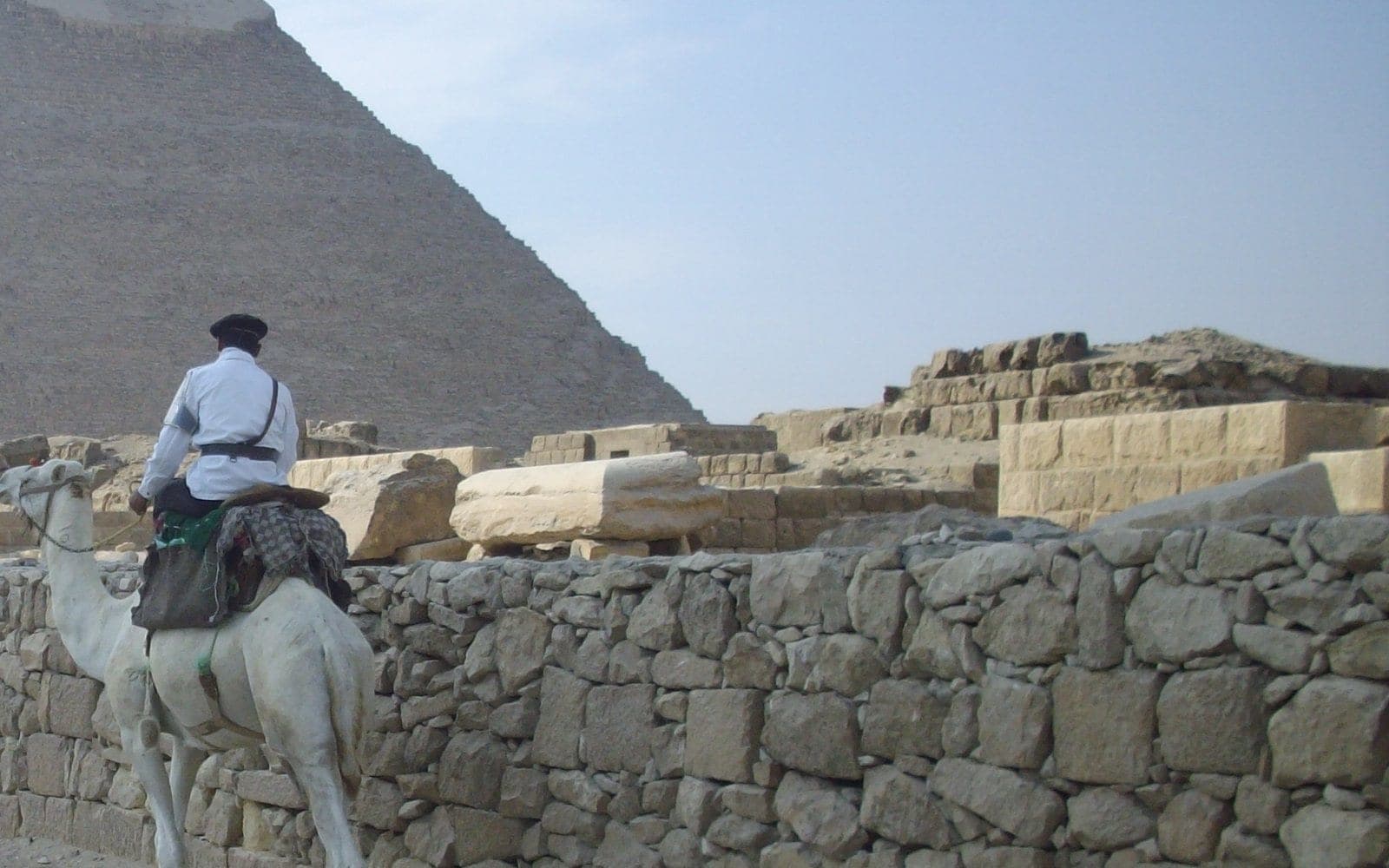
- The camel ride whose price triples on return, or that stops far from anywhere until you pay. Total price, duration and drop-off point agreed before you mount; payment at the end.
- The "papyrus institute" or "government exhibition closing tomorrow" a driver detours to: it's a commission shop. A simple "no, straight to the site" is enough.
- Short change, or change handed back in another currency. Count it in front of them, calmly, every time.
What actually helps
- A local SIM (Vodafone, Orange, Etisalat) bought at the airport with your passport: plenty of data for the price of a meal, and you're never dependent on wifi.
- A photo of your passport on your phone, the original at the hotel — except in Sinai, where checkpoints may ask for the original.
- Learn three words: "la, shukran" (no thanks), "khalas" (enough, kindly), "shukran" (thank you). They defuse 90% of approaches.
Useful numbers
- Tourist police: 126
- Police: 122 · Ambulance: 123 · Fire: 180
- Save your embassy's number before you travel: it's the one you can't find in a hurry.