
Everything before you go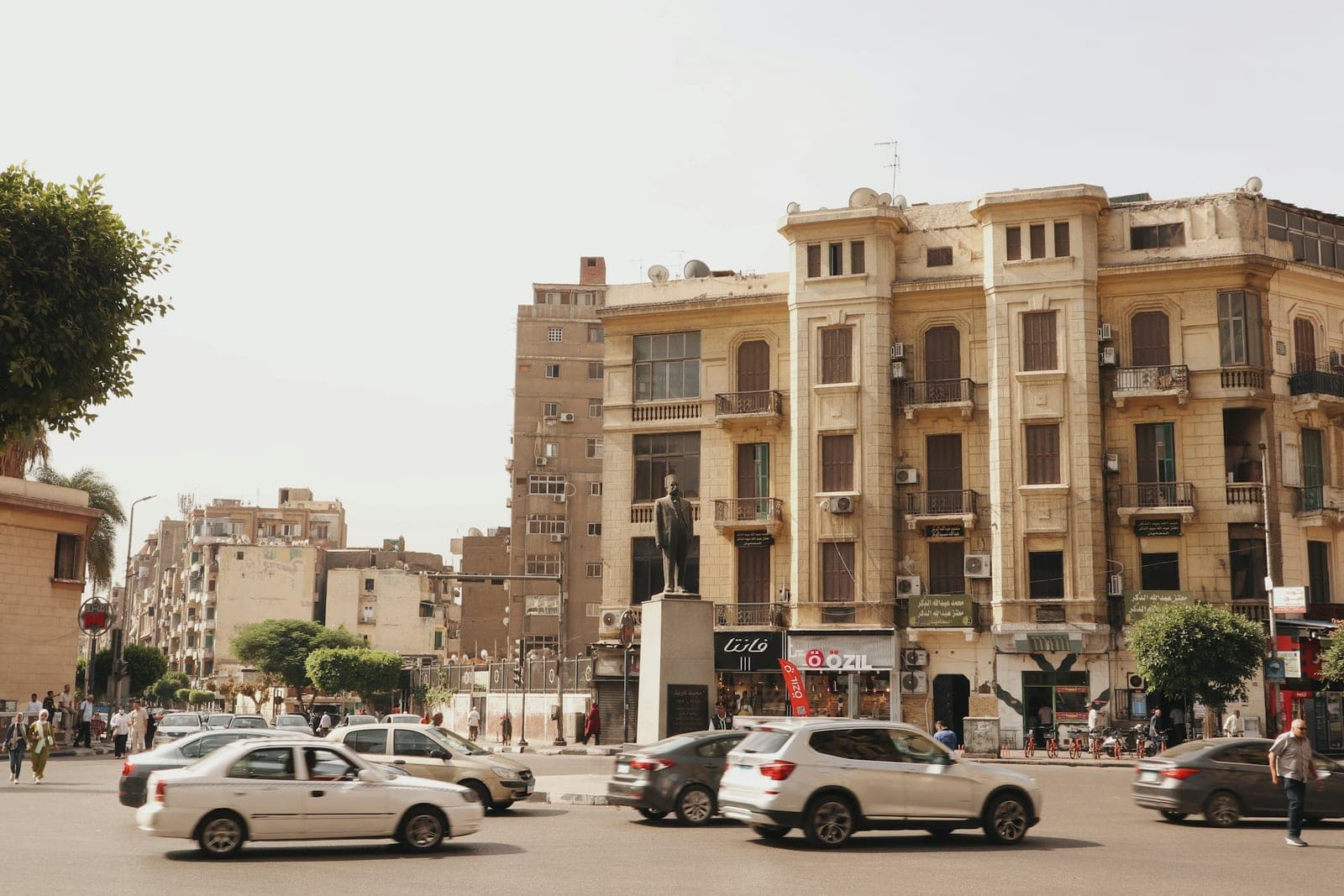
Once you are there
Four things settle 90% of the bad surprises: money, getting around, water, and how to say no.
Money, and baksheesh
A cash country, where the tip is not an extra but part of the price.
- Withdraw from a cash machine rather than changing over a counter: the rate is better, and airport exchange desks are the worst of all.
- Ask for small notes. A 200-pound note for a 40-pound ride will not be changed — "ma'aya fakka?" ("do you have change?") is the most useful phrase of the trip.
- Baksheesh is given for a service rendered: carrying a bag, opening a room, watching a car. A few pounds are enough, and refusing outright offends more than giving little.
- Cards work in hotels, malls and the bigger tables. Everywhere else — ahwas, taxis, souks, remote sites — it is cash or nothing.
Getting around
Metered taxis barely exist; ride-hailing apps do — and they settle the question of price.
- In town, ride-hailing apps (Uber, Careem, inDrive) show the price up front and remove the haggling. In Cairo and Alexandria they often cost less than a street taxi.
- In a white taxi, agree the price BEFORE getting in, or ask for the meter. On arrival, pay what was agreed without arguing.
- The Cairo metro is the fastest way across the city at rush hour. The first two carriages are reserved for women.
- Between cities, the train is comfortable along the Nile line, and long-distance coaches are reliable to the Red Sea and Sinai. Book the day before in high season.
Water, stomach and sun
Three trivial precautions that decide between a holiday and a lost week.
- Bottled water, seal intact, including for brushing your teeth in the first week. Ice in the bigger places is made with treated water; ice from street stalls is not.
- Street food is not the problem: lukewarm food is. Eat what comes out of the fryer or off the grill in front of you, somewhere busy.
- From May to September the midday sun is fierce everywhere and brutal in the desert: hat, water, and shade between noon and 3 pm. That is not caution, it is how the country organises its day.
- Bring something for an upset stomach and oral rehydration salts: Egyptian pharmacies are excellent and cheap, but you do not want to be looking for one at 3 am.
What is done, and what is said
Egypt is welcoming and insistent: refusing without falling out is the most useful skill you can have.
- A smiling "no thank you", repeated without breaking stride, is enough with touts. Explaining, arguing or losing your temper restarts the conversation.
- In mosques and churches: shoulders and knees covered, shoes off, headscarf for women in mosques. Nobody will hold it against you if you ask first.
- Photograph people AFTER asking, and never the military, bridges, airports or police stations.
- During Ramadan, people do not eat or drink in the street during daylight out of consideration, even if not fasting themselves — and the tables open in force after sunset.
These customs hold across the country, with one nuance: the further you get from Cairo and the beach resorts, the more covered dress and reserve are the norm — and the more direct the welcome.