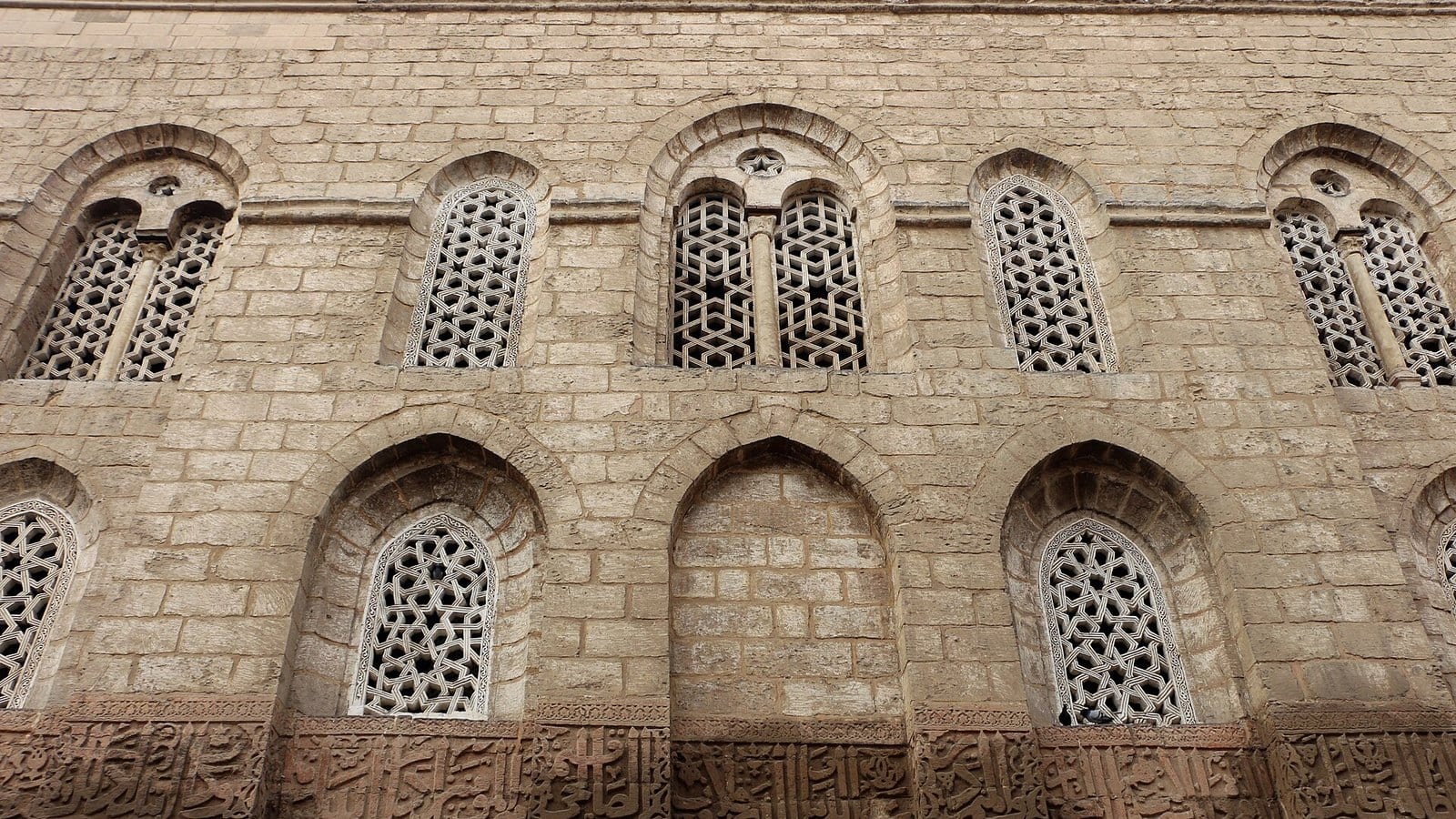
Photo : Sailko — CC BY 3.0, Wikimedia Commons
Cairo · Al-Muizz, Gamaliya
Qalawun Complex
A madrasa, a mausoleum and a hospital from 1284, in the middle of al-Muizz street.
The Mamluk sultan Qalawun had this group built in 1284-85 on the ground of the old Fatimid palace, at the spot the city called Bayn al-Qasrayn. Three functions sit behind a single façade: a madrasa, the sultan's mausoleum, and a hospital — the bimaristan — which treated patients free of charge for centuries and was still working in the nineteenth. The room to see is the mausoleum, with its reused marble columns, an inlaid mihrab, a gilded wooden ceiling and light filtered through mashrabiya. On the way out, stay on the same pavement: the neighbouring façades are those of the madrasa of his son al-Nasir Muhammad and of the Barquq complex.
The extra bit
The three adjoining monuments go together in one visit, taken in pavement order: Qalawun, al-Nasir Muhammad, Barquq. Twenty minutes each buys you a century of Mamluk architecture without leaving a single street.
Know before you go
The al-Muizz monuments close earlier than you would think, and scaffolding comes and goes, so expect one of the three to be shut on the day you come. The bimaristan is not always open. This stretch of the street is pedestrianised: a taxi will leave you at the al-Azhar Street corner or near Bab al-Futuh, and the rest is on foot.