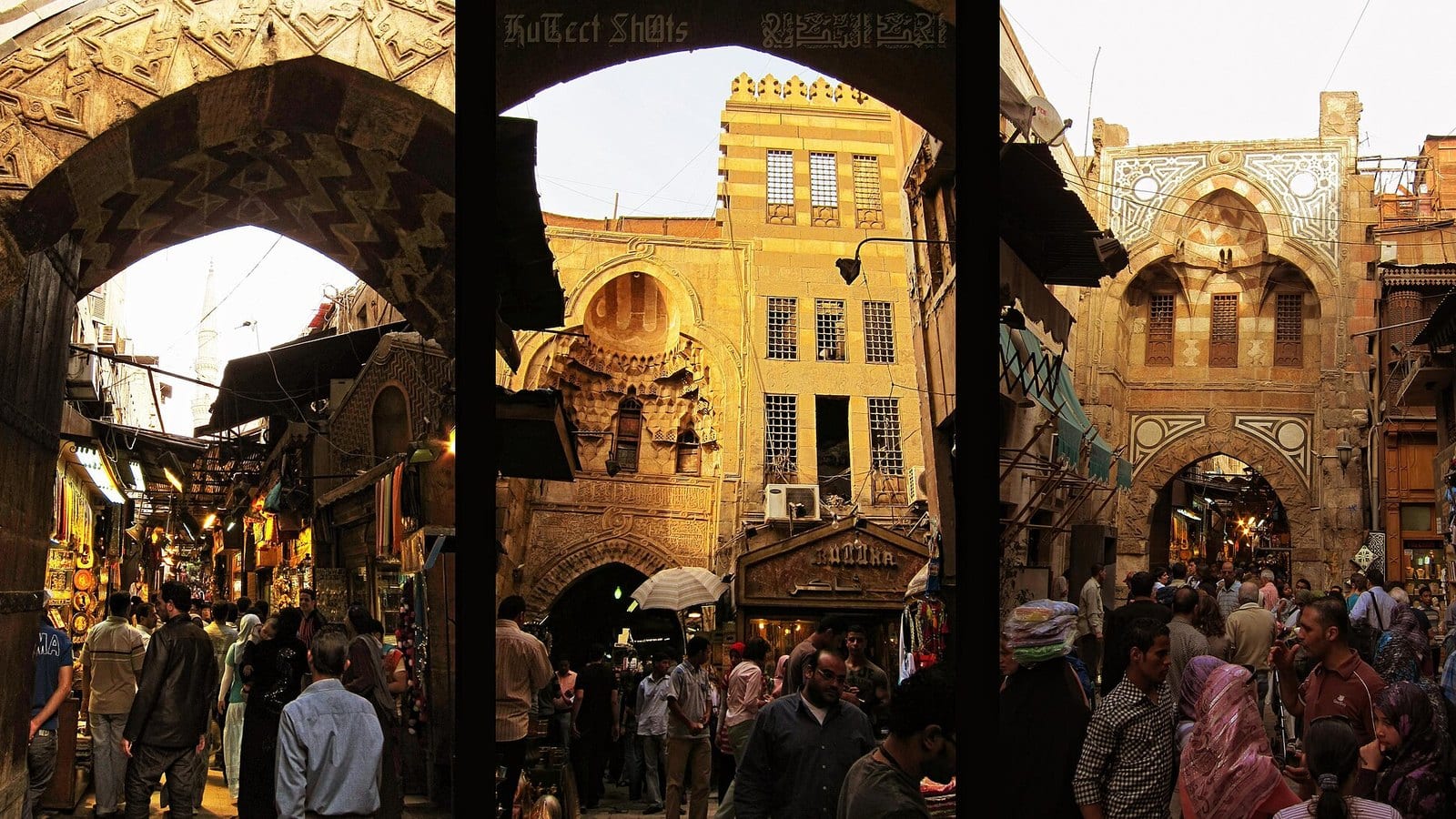
Photo : Ahmed Al.Badawy from Cairo, Egypt — CC BY-SA 2.0, Wikimedia Commons
Cairo · Gamaliya
Khan el-Khalili
A caravanserai from 1382 turned into a labyrinth of trades. On foot, and without a watch.
The emir Jaharkas al-Khalili had a khan built here in 1382, under sultan Barquq; sultan al-Ghuri rebuilt it in the early sixteenth century, and its monumental gateways still stand in the middle of the souk. Six centuries on, the quarter is still organised trade by trade: coppersmiths on one side, the goldsmiths of the Sagha, spices, lanterns, cloth, each in its own lane. The strip along al-Hussein Square is all souvenir shops; two streets further in you are among wholesalers and workshops, where Cairenes come to buy rather than to look.
The extra bit
Come in from Muski Street, on the side away from al-Hussein: you cross the souk where Cairenes do their own shopping first, and reach the bazaar from behind, once you know what things should cost.
Know before you go
Whatever price is quoted first is not the price — bargain calmly, and walk away without embarrassment. Cash, and a closed bag held in front of you: it is crowded and you will be jostled. Some lanes raise their shutters late in the morning and close on Sunday or Friday, while the shops on the al-Hussein side stay open well into the night, so don't build a day around one particular purchase.