Photo : OmarJihad — CC BY-SA 4.0, Wikimedia Commons
Cairo · Rumeila
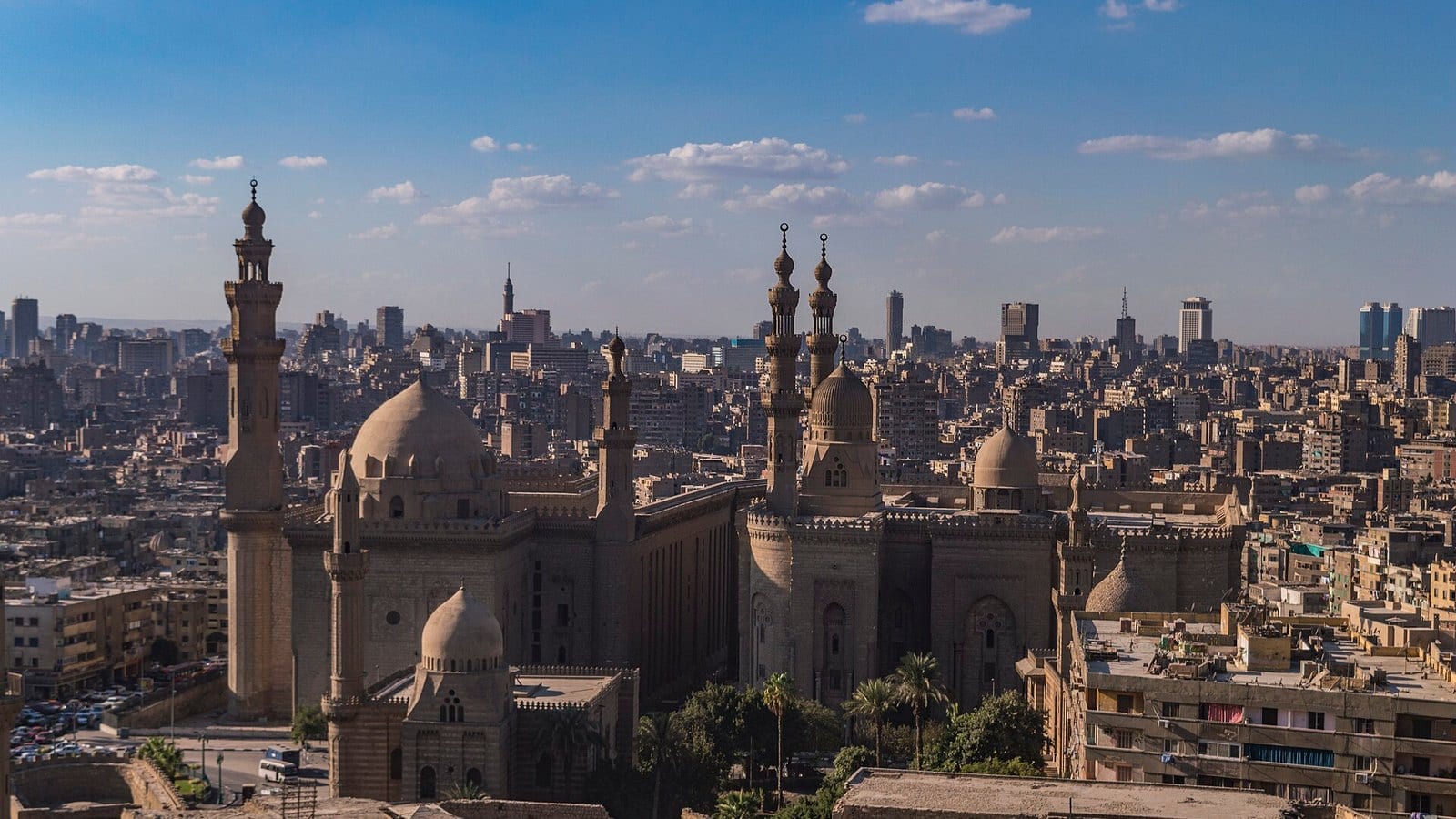
Al-Rifai Mosque
Muhammad Ali's dynasty rests here — and, with it, the last Shah of Iran.
Khedive Ismail's mother started the work in 1869, to hold the tombs of the ruling family and that of a Sufi saint already venerated on the site, Ali Abu Shubbak al-Rifai. Building stopped, resumed, and the mosque was only finished in 1912 under Abbas Hilmi II; the Hungarian architect Max Herz, then in charge of conserving Cairo's Arab monuments, saw it through. The style is unapologetic neo-Mamluk, answering Sultan Hassan across the square point for point, though it is centuries younger. Inside: gilded ceilings, coloured marble, the graves of Ismail, Fuad and Farouk, and that of Mohammad Reza Pahlavi, the last Shah of Iran, who died in exile in Cairo.
The extra bit
The graves are not in the prayer hall but in side chambers, and plenty of visitors leave without seeing them. Ask the attendant to point out the Shah's: it does not stand out from the others at first glance.
Know before you go
Cross the square and you are at Sultan Hassan, on the same rise. The decoration is richer here and the effect weaker — with only an hour to spare, pick the older building. Al-Rifai is still a place of prayer: shoes off, shoulders and knees covered, and a wait if the call goes up as you arrive. The burial chambers are not always open — someone has to come and unlock them.