
Photo : Holger Uwe Schmitt — CC BY-SA 4.0, Wikimedia Commons
Cairo · Sayyida Zeinab
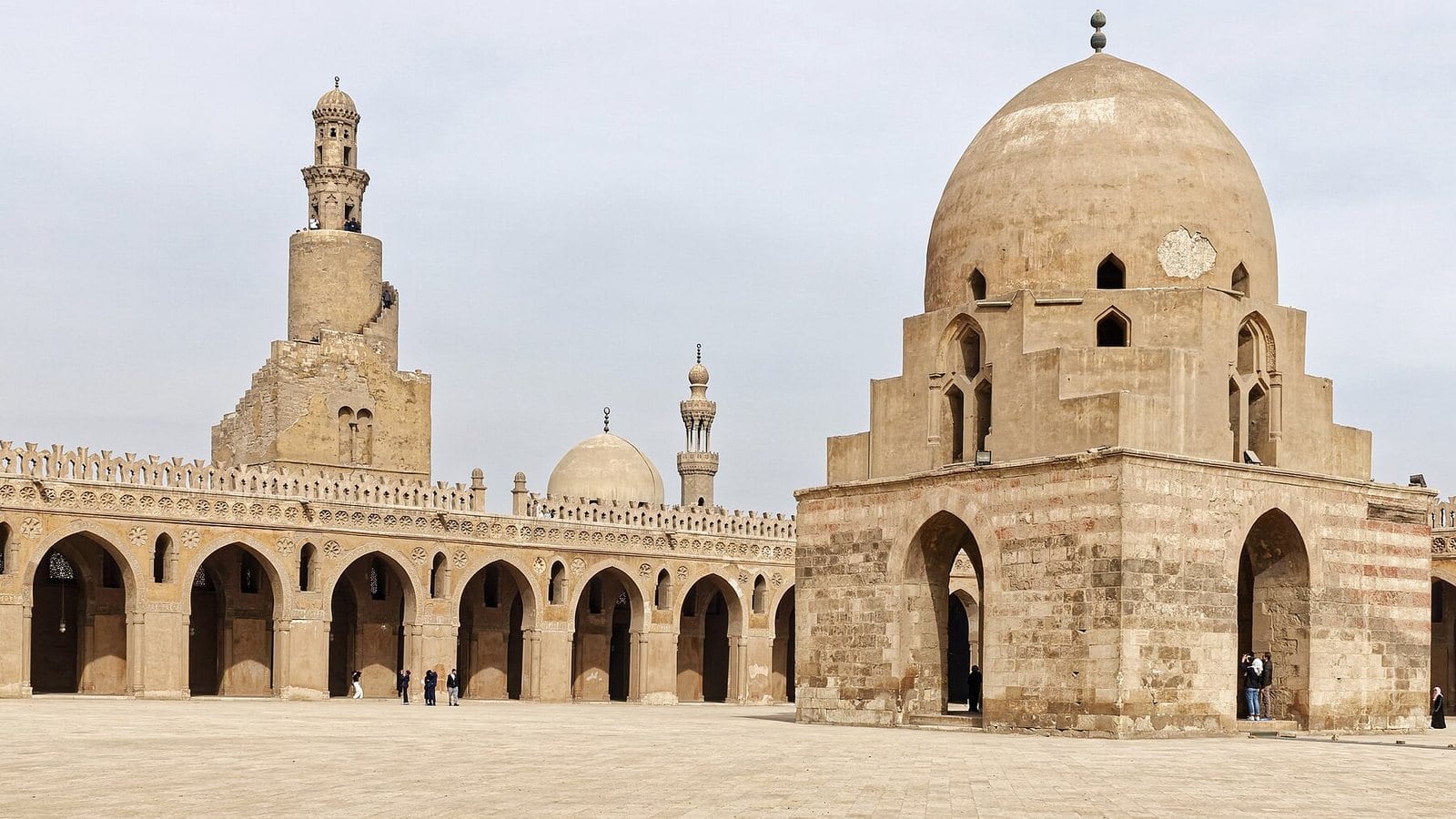
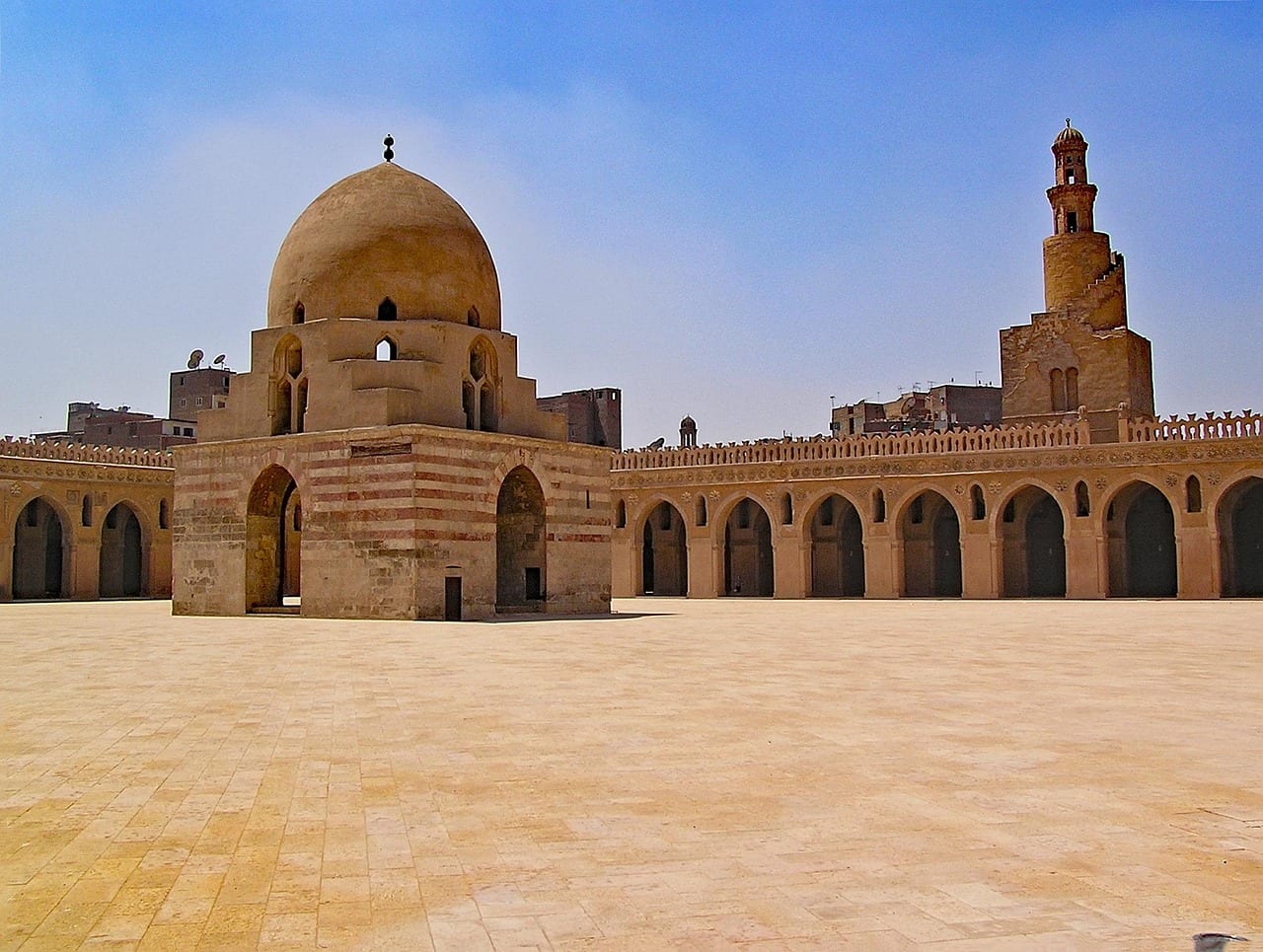
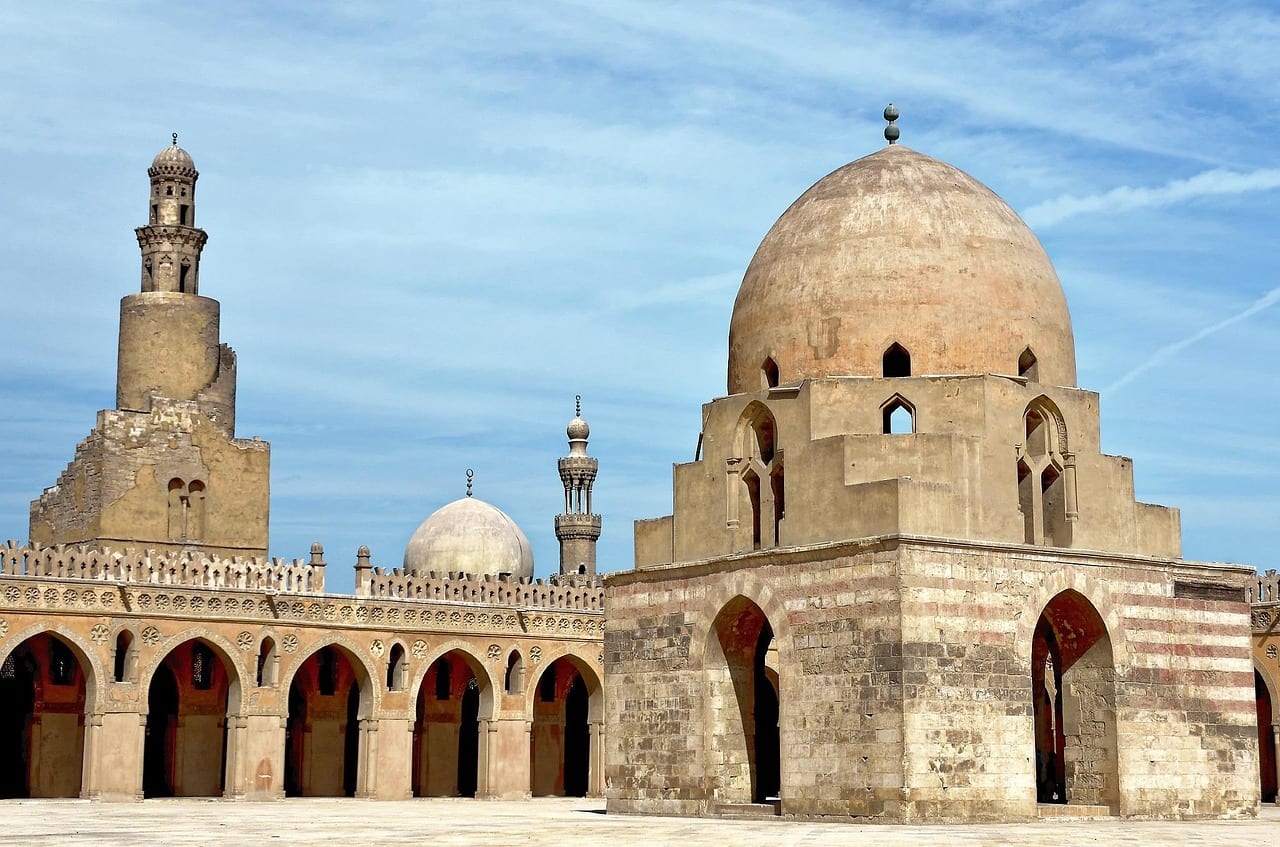
Ibn Tulun Mosque
Cairo's oldest mosque still in its original form, with a minaret whose staircase runs outside.
Ahmad ibn Tulun, a governor who became master of Egypt, had this mosque built between 876 and 879 in al-Qata'i, the capital he gave himself north of Fustat; nothing else of that city survives. It is made of fired brick and stucco rather than stone, unusual in Cairo, and its courtyard is the largest in the city: a near-empty square inside arcades, where the emptiness is the point. The minaret's spiral ramp on the outside recalls Samarra, where Ibn Tulun came from; its present shape probably dates from a Mamluk restoration late in the thirteenth century. The cut-out crenellations along the top of the walls, like paper figures standing in a row, are the other thing you remember.
The extra bit
Climb the minaret by the outside ramp: from the platform, the Citadel, Sultan Hassan and a sea of roofs. The steps are wide but there is no real handrail on the drop side — skip it if you have any fear of heights, or if you have a small child with you.
Know before you go
You come first into the ziyada, the empty outer enclosure that rings the mosque: don't conclude you have the wrong address — the building itself lies further in. Shoes off at the door, carried with you or left with the attendant for a small tip. The courtyard has no shade at all by midday, so come early. The Gayer-Anderson Museum is built against the outer wall: it slots straight onto the visit.