
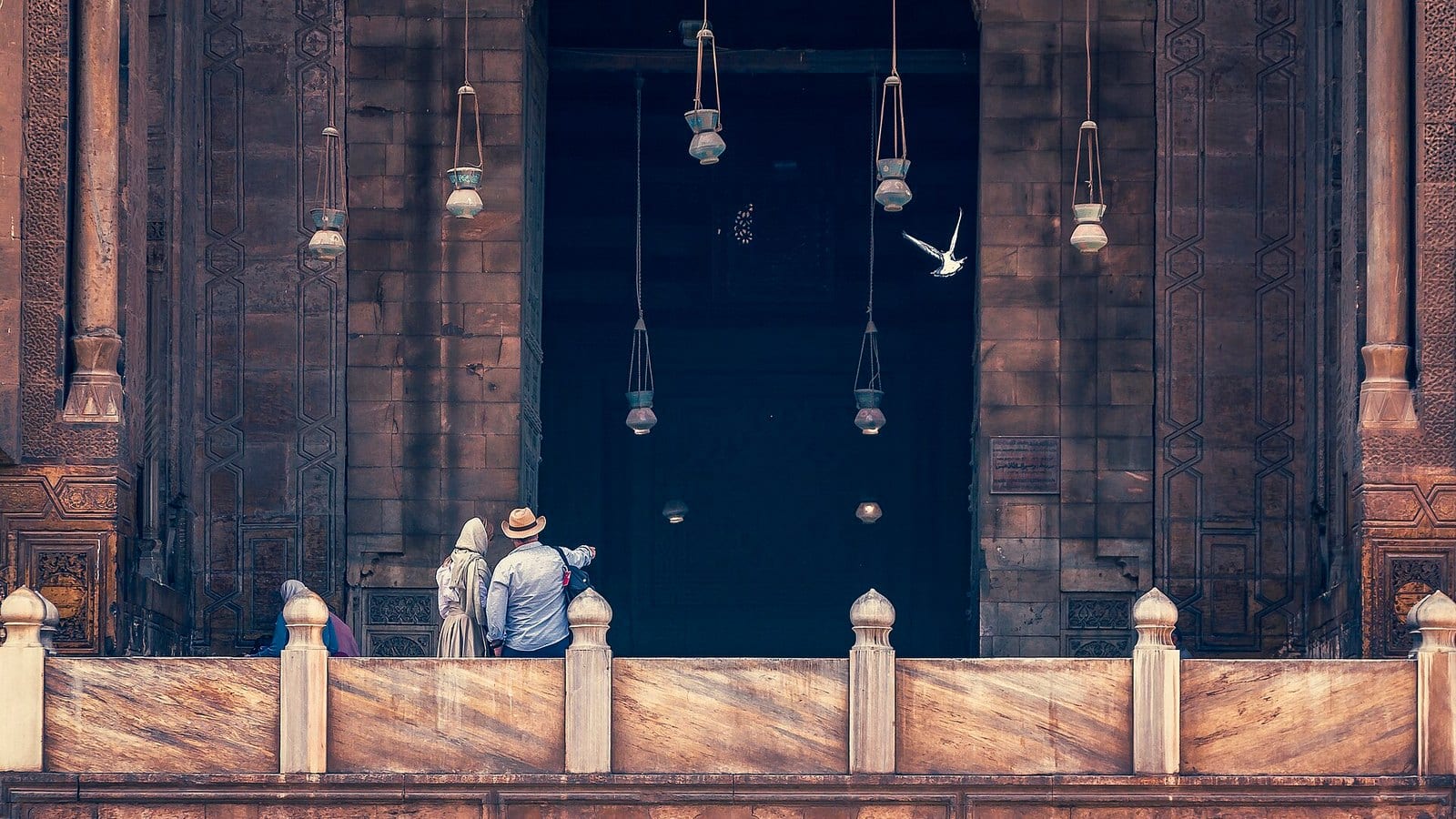
Photo : Abdo tahoon — CC BY-SA 4.0, Wikimedia Commons
Cairo · Rumeila
Sultan Hassan Mosque
Cairo's largest Mamluk complex — and a mausoleum whose occupant never arrived.
Built between 1356 and 1363 for Sultan al-Nasir Hassan, it brings together a mosque and four madrasas — one for each Sunni school of law — around an open courtyard. You come in through a portal whose sheer height flattens you, then a dark dog-legged corridor opens all at once onto that courtyard; the contrast between the dark passage and the light of the sahn is deliberate. The sultan was murdered in 1361, before the work was finished; his body was never found and the mausoleum behind the qibla wall never received him. The southern minaret is the tallest of the Mamluk period; another collapsed above the entrance while building was still under way.
The extra bit
Stop in the dog-legged corridor before you step out into the courtyard: that is where the effect is built, and most people walk straight through it. The qibla iwan stays cool at the worst hour of the day — the best place in the district to sit for twenty minutes.
Know before you go
Al-Rifai faces it across the square; allow an hour and a half if you take both. It is a working place of worship: shoes off, shoulders and knees covered, hair covered for women; visiting stops at prayer time, and at midday on Friday the mosque is closed to visitors. An attendant will offer to open the minaret or to "guide" you; it is a tip he is after, not an official service, and you are free to say no.