Photo : Richard Mortel from Riyadh, Saudi Arabia — CC BY 2.0, Wikimedia Commons
Cairo · Old Cairo, Fustat
Coptic Museum
The largest collection of Coptic art anywhere, in a museum built against the walls of the Babylon fortress.
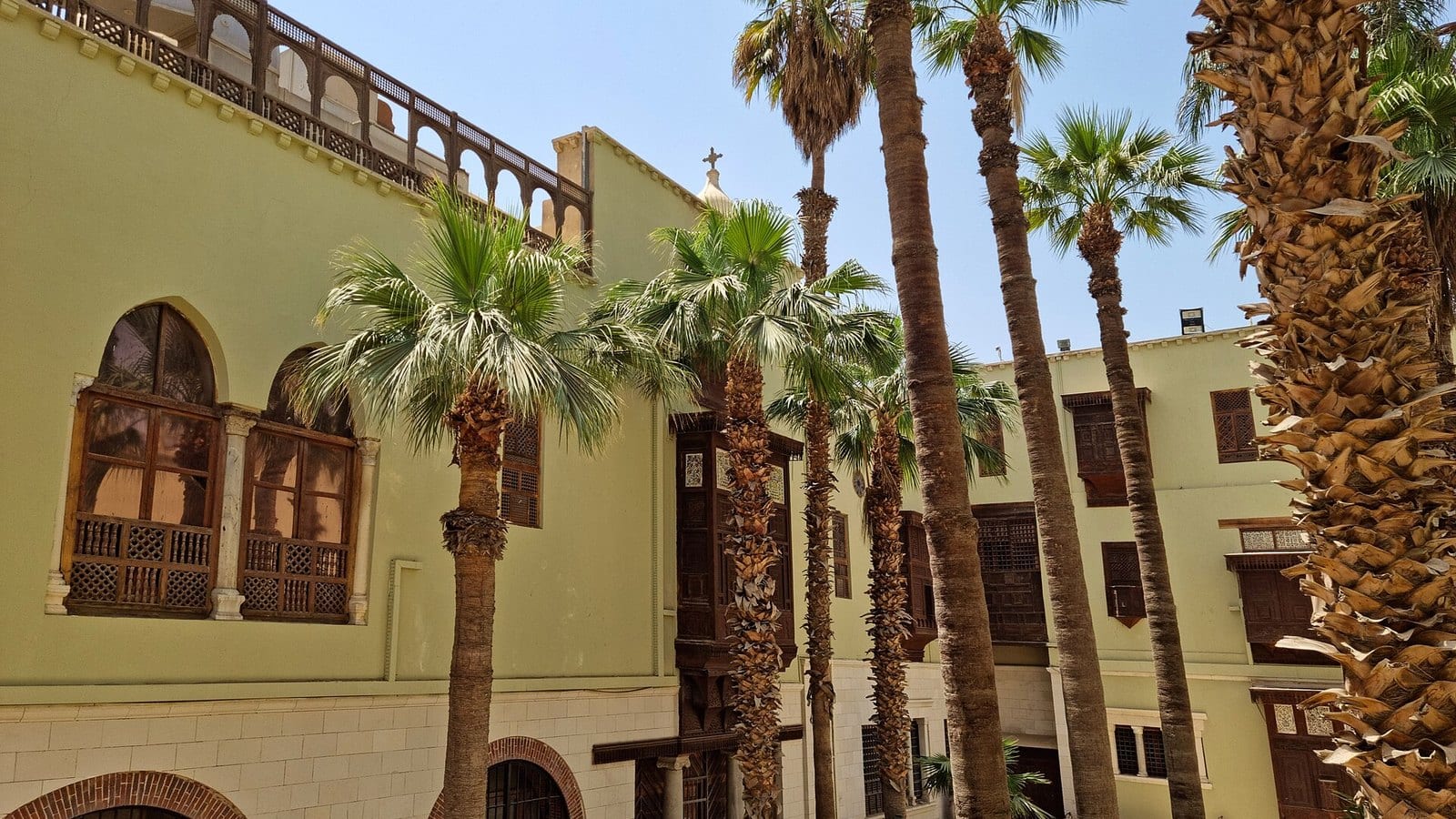
Founded in 1908 by Marcus Simaika, the museum fills two wings built against the walls and towers of the Roman fortress; its wooden ceilings, mashrabiyas and columns were taken from houses and churches of Old Cairo, so the building is part of the collection. What is on show here is a change of faith rather than a style: pharaonic and Greek vocabulary crosses into Christianity, the ankh becomes a cross, linen keeps the older patterns. The things to see are the frescoes from the monastery of Bawit, the icons, the carved woodwork, and part of the Nag Hammadi codices, the Gnostic texts found in Upper Egypt in 1945.
The extra bit
The ticket covers the museum alone: the churches in the compound, the Hanging Church among them, are free; for Ben Ezra synagogue, check on the spot. So take the museum first and leave the churches for the way out — they still repay a tired eye.
Know before you go
The labels are uneven, in Arabic and English, and the museum does not tell you who the Copts were: three pages read beforehand change the visit. Late in the morning, tour groups work through the same rooms in the same order; at that hour, begin at the top floor and come down. Allow two hours for everything, one for the essentials.