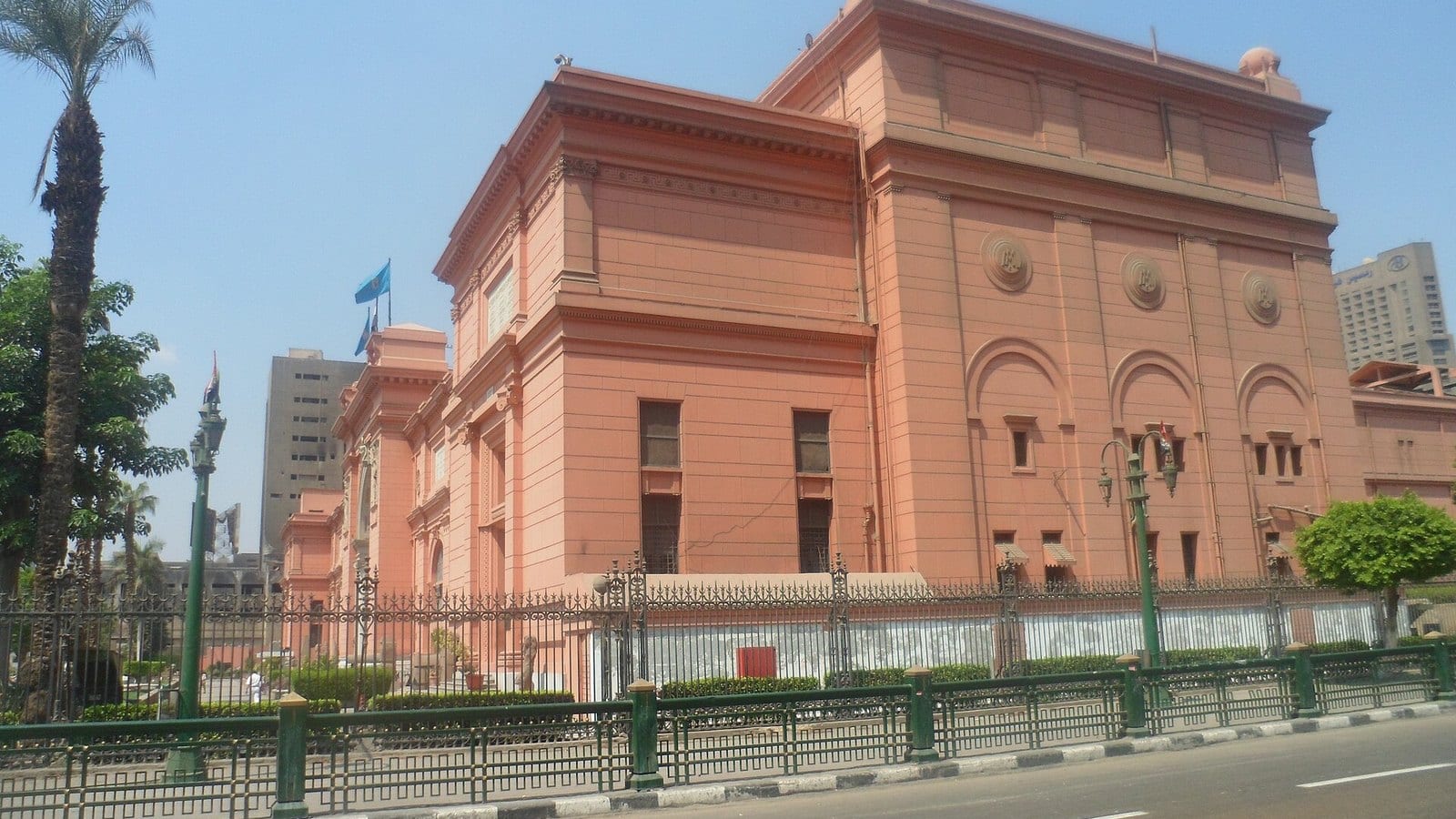
Photo : Johnny 201 — CC BY-SA 3.0, Wikimedia Commons
Cairo · Tahrir, Downtown
Egyptian Museum in Tahrir
Tutankhamun and the royal mummies have gone elsewhere; the rest, vast, has stayed.
The pink building on Tahrir Square, designed by Marcel Dourgnon and opened in 1902, was the first anywhere built to be a museum of Egyptian antiquities, and it still feels like one: wooden cases, many typewritten labels, high rooms lit by daylight. Two departures have changed its face: the royal mummies went down to the National Museum of Egyptian Civilisation in Fustat in 2021, and the Tutankhamun treasure joined the Grand Egyptian Museum in Giza, open since November 2025. What remains would fill ten museums: the Narmer Palette, the Menkaure triads, the diorite Khafre, Rahotep and Nofret, the Meidum geese, the Sheikh el-Balad, the Akhenaten colossi in the Amarna room, the Yuya and Tjuyu treasure, the Tanis goldwork.
The extra bit
Don't start on the ground floor, laid out chronologically: go up first, before the eye tires, then come down to the Old Kingdom. And if you have come for the mummies, the place to go is the National Museum of Egyptian Civilisation in Fustat, right beside Coptic Cairo.
Know before you go
Ask at the ticket desk what is open before you pay: the two transfers have left rooms half rearranged, and you will walk past empty cases. Cross Tahrir Square through the metro underpasses at Sadat station, not at street level. Some labels are the original ones, while other rooms have been redone in the refurbishment — part charm, part handicap — and the animal mummy room holds children longer than the statues do.