Photo : Prof. Mortel — CC BY 2.0, Wikimedia Commons
Cairo · Sayyida Zeinab
Gayer-Anderson Museum
A furnished Ottoman house, lived in as it was, pressed against Ibn Tulun's outer wall.
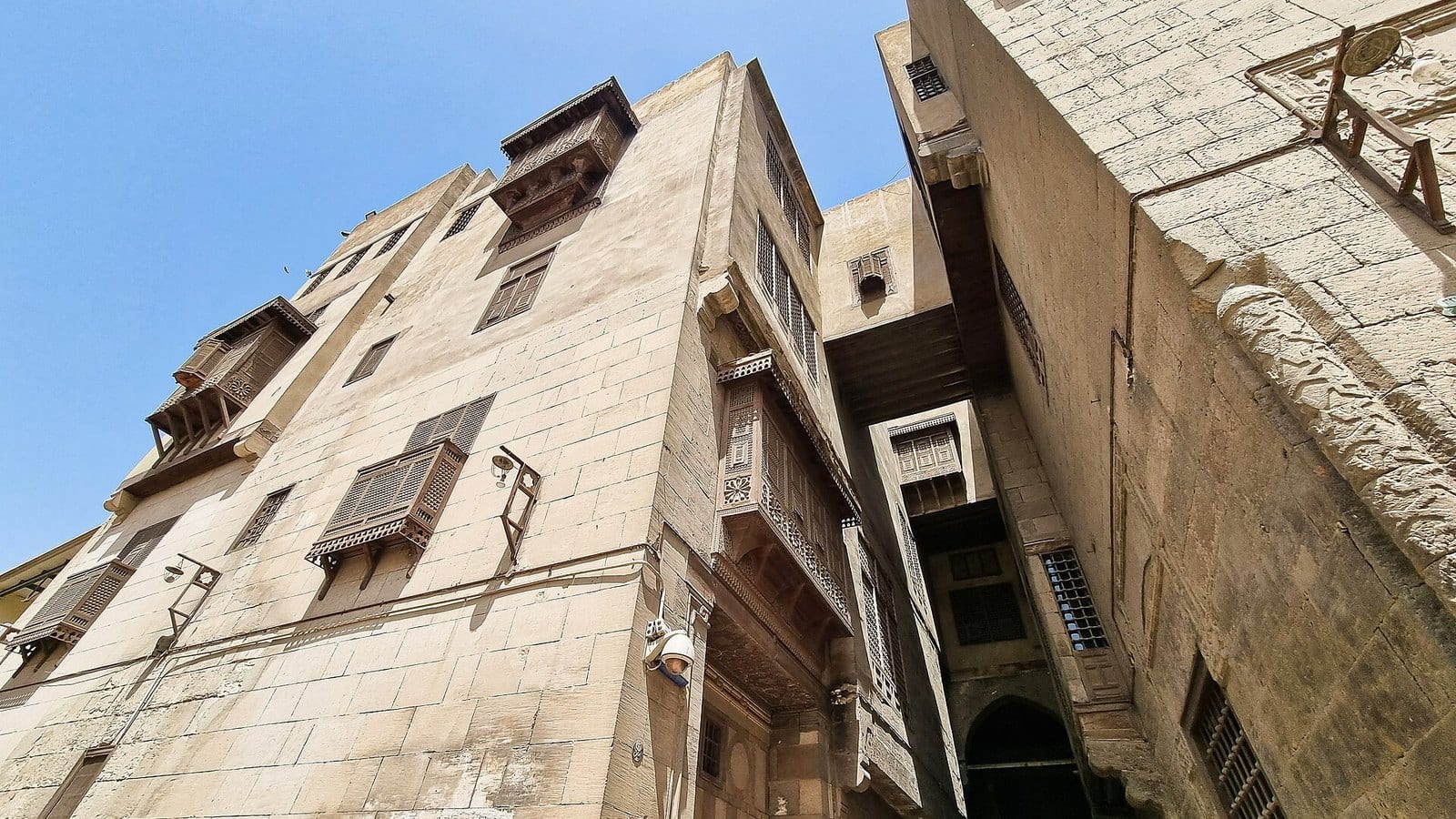
These are two houses, one from 1540 and one from 1632, joined into a single dwelling and backed onto Ibn Tulun's outer wall. In the 1930s a British Army officer and physician, Robert Grenville Gayer-Anderson, was allowed by the Egyptian state to live here, restored the place, filled it with his collections and left the lot to Egypt on his departure. It is therefore one of the few places in Cairo where you see a notable's house furnished rather than stripped: the reception qa'a with its fountain, the mashrabiya screens, the latticed loggia from which the women followed what went on below, and whole rooms done out in Persian, Damascene and English taste. The roofs, passages and crooked stairs tell you more about the Cairene house than any floor plan.
The extra bit
Finish on the roof terrace: Ibn Tulun's spiral minaret is right there, a few metres away, and there is no better vantage point in the district. Almost nobody goes up.
Know before you go
The museum has its own ticket, and it does not cover the mosque next door. Narrow steep stairs, uneven floors, no lift: this visit is not for everyone. The house is small and an hour is enough. An attendant will follow you room to room with a commentary: it runs on a tip, and you can decline if you would rather have the quiet.