Photo : Holger Uwe Schmitt — CC BY-SA 4.0, Wikimedia Commons
Aswan · Aswan
Nubian Museum
Nubia before Lake Nasser, and the villages that had to be left behind.
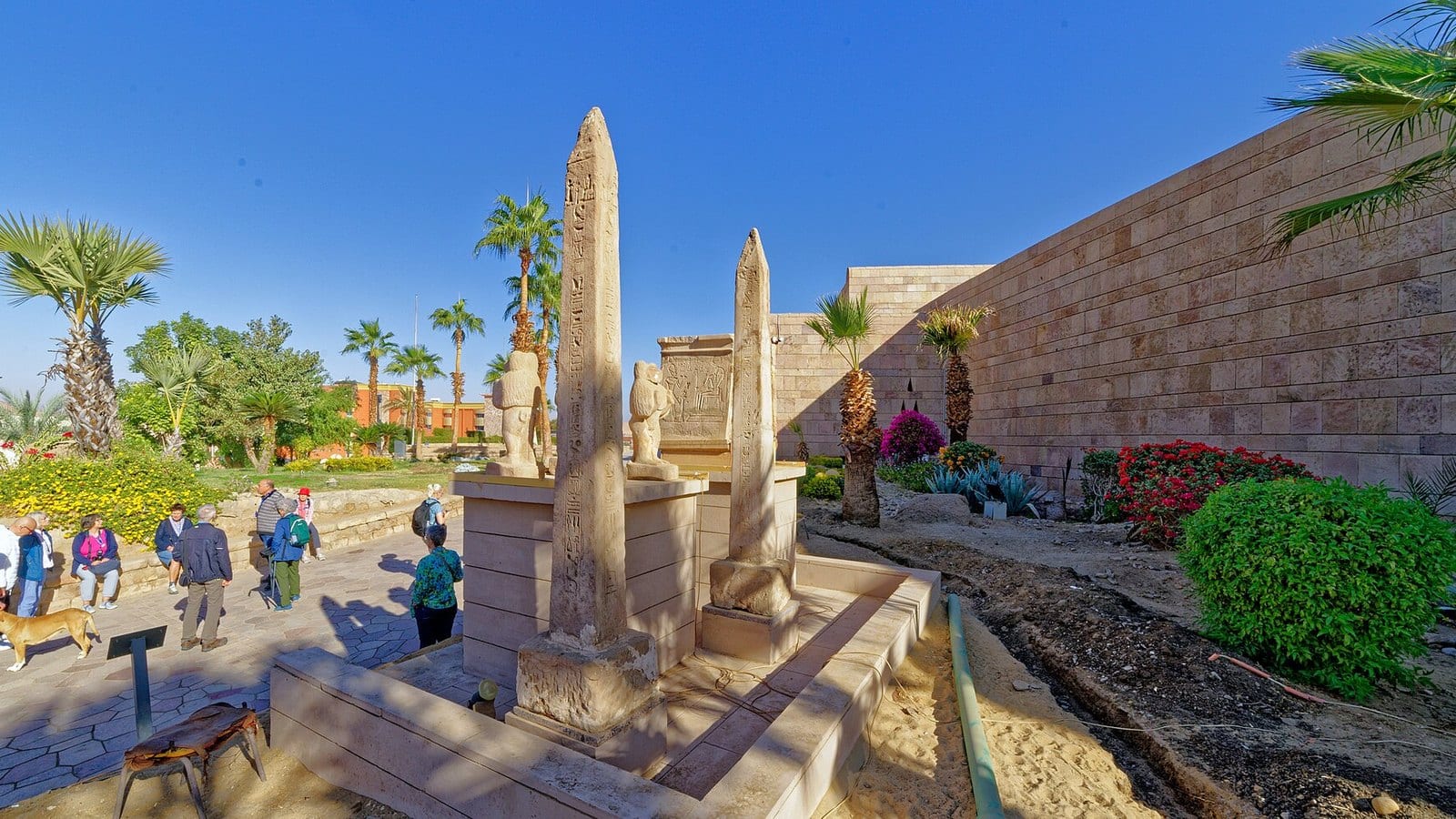
Opened in 1997 at the southern end of town, the museum was built with UNESCO at the close of the international campaign that saved the temples of Nubia. The displays run from prehistory to the Islamic period, but the heart of the place is elsewhere: the section on the High Dam, the rising water and the departure of Nubian families, most of them resettled around Kom Ombo. It is told plainly, through ordinary objects and photographs, and the route needs no guide. The garden carries the visit on outside, with a model of the Nile's course and a rebuilt Nubian house.
The extra bit
Start at the end. The modern section, the dam and the resettlement, gives meaning to everything before it; the other way round, you walk through it tired.
Know before you go
The museum sits away from the centre, over towards the Fatimid cemetery: take a taxi, the walk is long in the sun. Photography sometimes carries a surcharge. The galleries are out of the sun, which makes this the right stop for the hottest hours.