Photo : Michael Hermann — CC BY-SA 4.0, Wikimedia Commons
Marsa Matrouh and Siwa · Siwa
Siwa Oasis
A desert depression with salt lakes, a palm grove, and a mud-brick fortress in the middle.
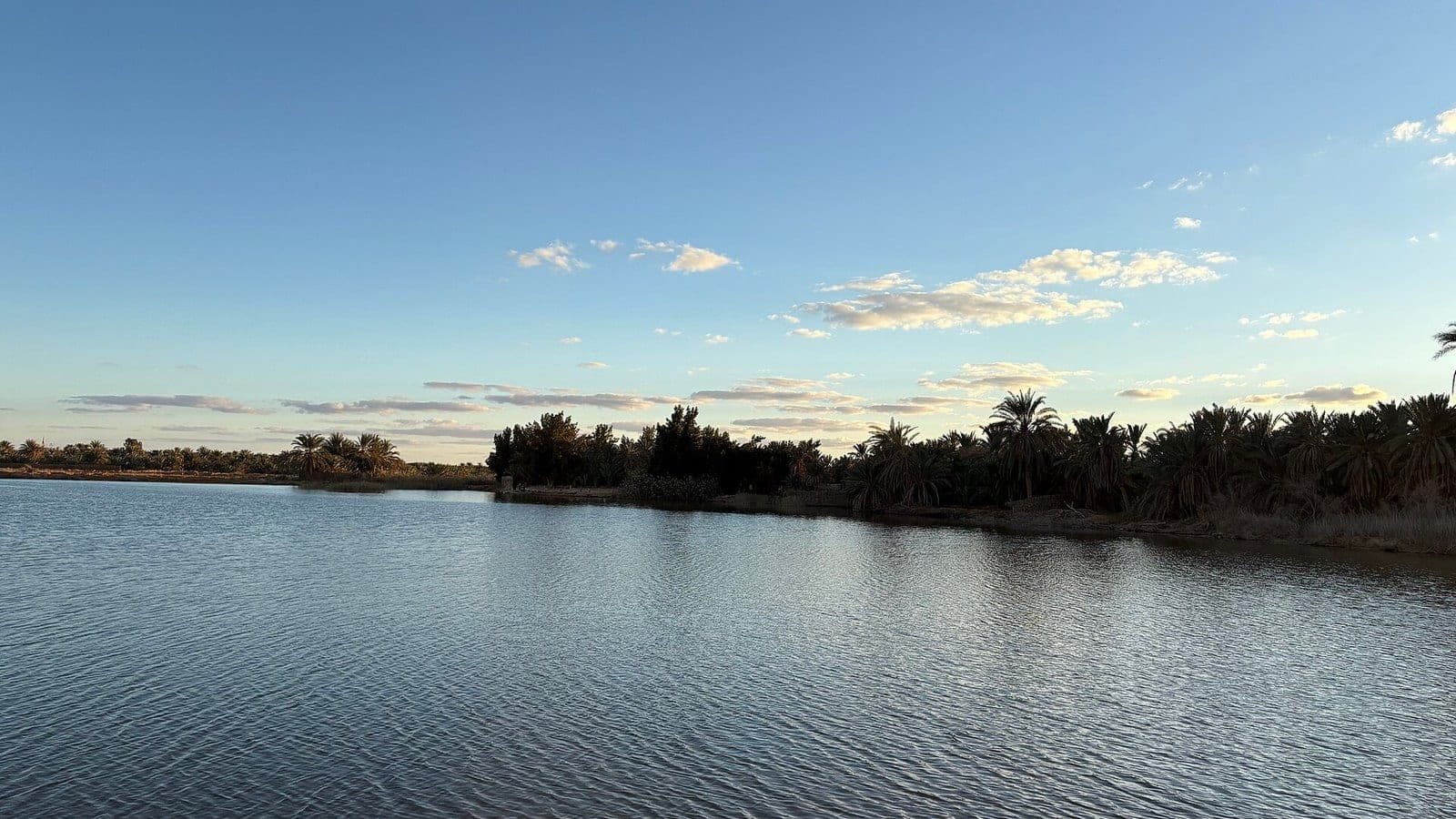
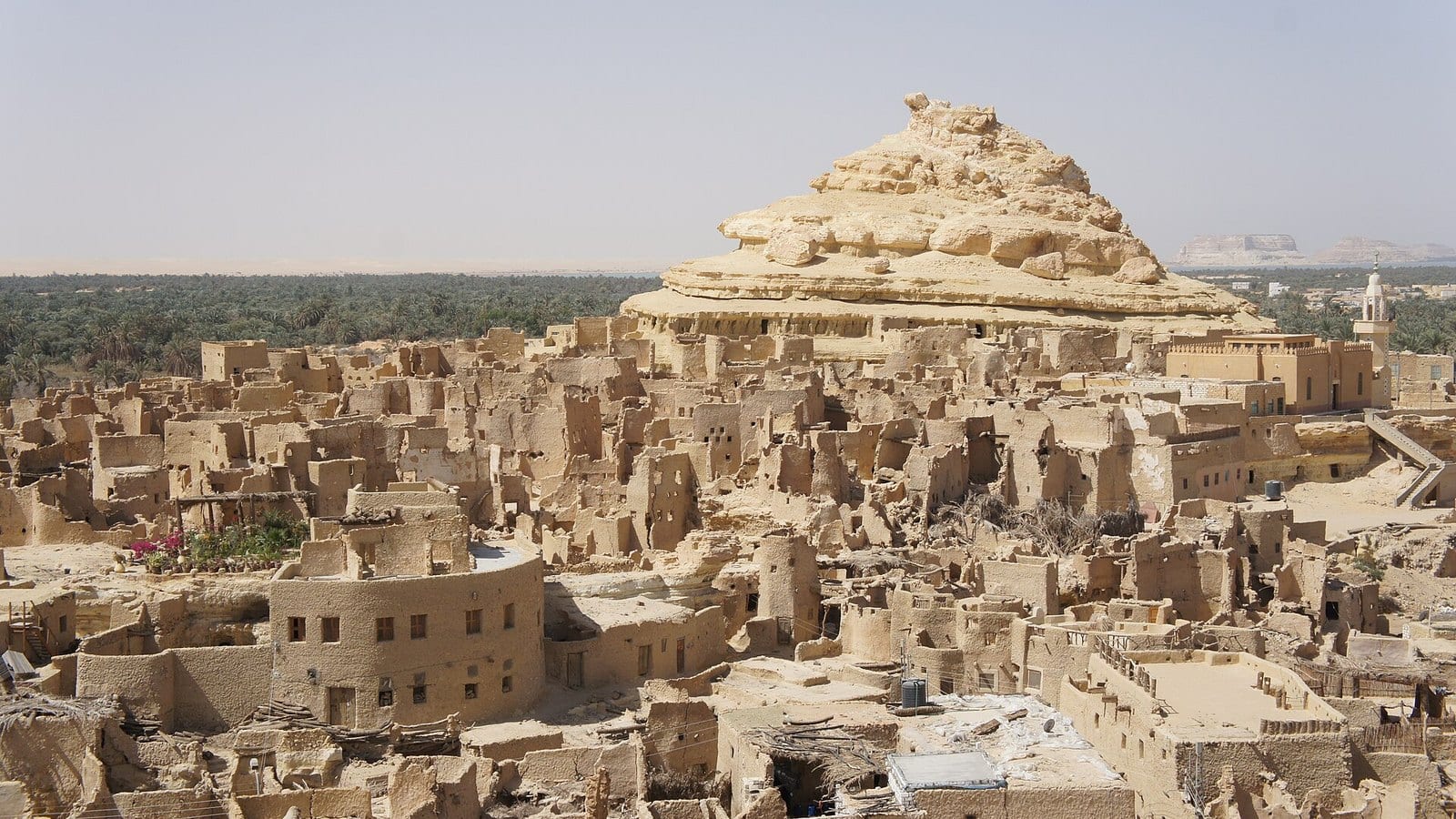
Siwa lies on the floor of a Western Desert depression, partly below sea level, a few hundred kilometres south of Marsa Matrouh and not far from the Libyan border: springs, salt lakes, and a grove of date palms and olives that the oasis lives on. At its centre stands Shali, a fortress built of karshif — blocks of clay loaded with salt from the lakes — parts of which dissolved under exceptional rains in the 1920s, after which people came down to build around it. What still stands you climb on foot, lane after lane, until the palm grove opens up below. Around the town: the temple of the oracle of Amun at Aghurmi, where tradition has Alexander putting his question, the tombs cut into Gebel al-Mawta, and the Great Sand Sea, which begins to the south-west. The language of the streets is Siwi, a Berber language, spoken alongside Arabic.
The extra bit
Climb Shali or Gebel Dakrour late in the afternoon: from up there the whole shape of the oasis is plain, palm grove on one side, white lakes on the other. Keep the morning for Aghurmi and the tombs, before the heat comes up.
Know before you go
The only way in is by road, and the drive is counted in hours: set off rested, and don't count on a filling station every fifty kilometres. Walking the oasis costs nothing, but the temple at Aghurmi and Gebel al-Mawta each have their own ticket. The oasis is conservative, alcohol is not the custom, covered clothing applies to everyone, and you ask before photographing anyone. Cash machines are few and cards little accepted: bring cash from Matrouh or Cairo. Dune trips are done in a 4×4 with a local driver, never in an ordinary saloon car. This is border country and the road carries checkpoints.