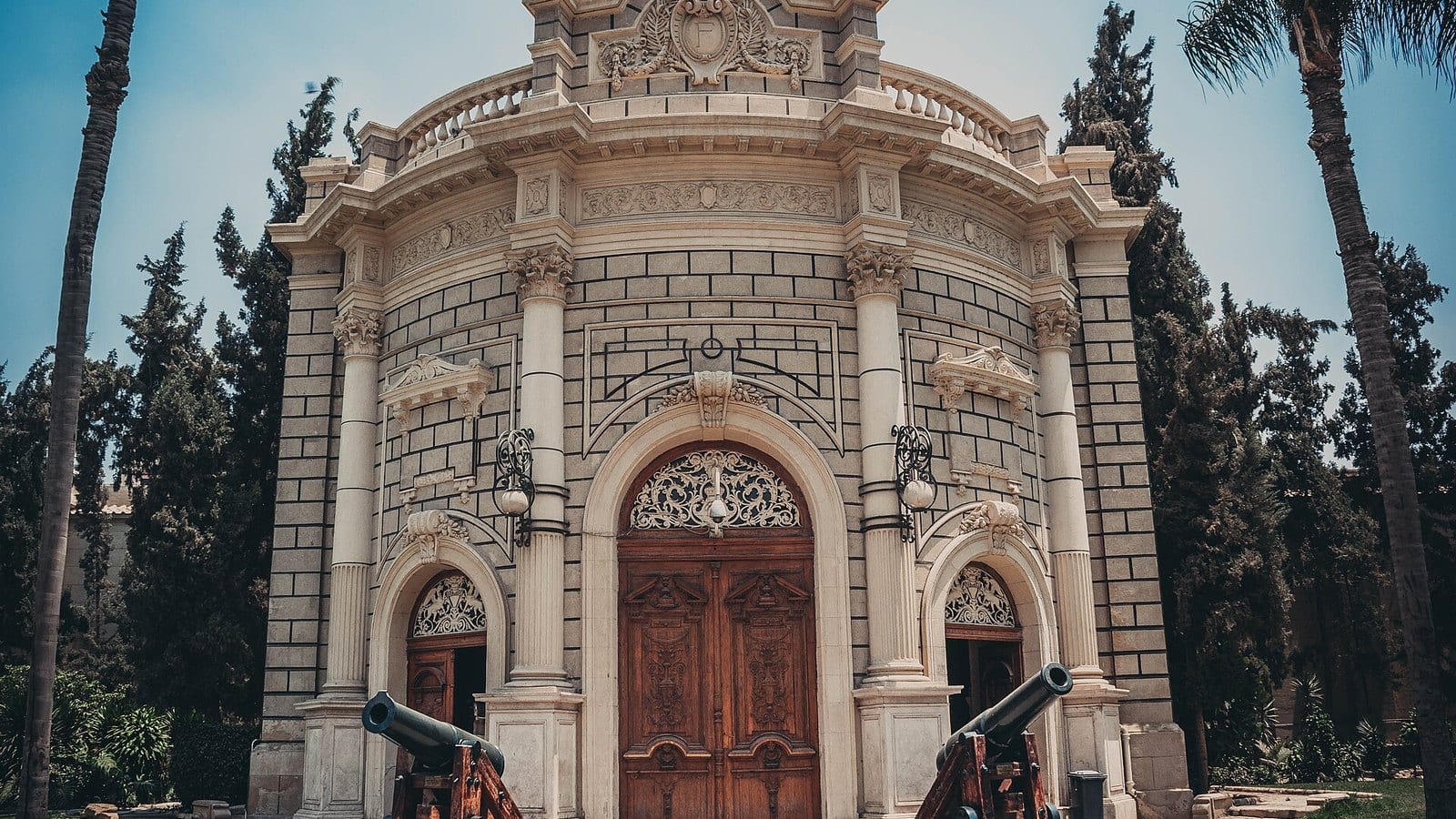
Photo : Omar A Ragab — CC BY-SA 4.0, Wikimedia Commons
Cairo · Abdeen
Abdeen Palace
The day power left the Citadel and came down into the city.
Khedive Ismail had Abdeen built between 1863 and 1874 to designs by the French architect Léon Rousseau, and moved the seat of government into it: since Saladin, Egypt had been ruled from the Citadel, up on its rock; from then on it would be ruled from a European palace, level with the new city. It was in front of this façade that Ahmed Urabi put his demands to Khedive Tewfik in 1881. A royal residence until 1952, the palace is today a presidential one: the state rooms are closed to visitors, but a museum wing is open — silver, arms, orders and medals, gifts made to heads of state, historical documents. The arms collection is the strongest part of it, from inlaid rifles to pieces presented to Mohamed Ali and to Farouk.
The extra bit
The museum entrance is not the ceremonial gate on the square: walk round the palace to the visitors' gate, and bring an identity document, as it may be asked for at the security check.
Know before you go
Allow an hour and a half, garden included; the part open to the public is only a corner of the grounds. Phones and cameras are usually left at the door, and photography is not allowed in the rooms. The palace is still in presidential use, and a ceremony can close it for the day: ask at the visitors' gate on the day itself.