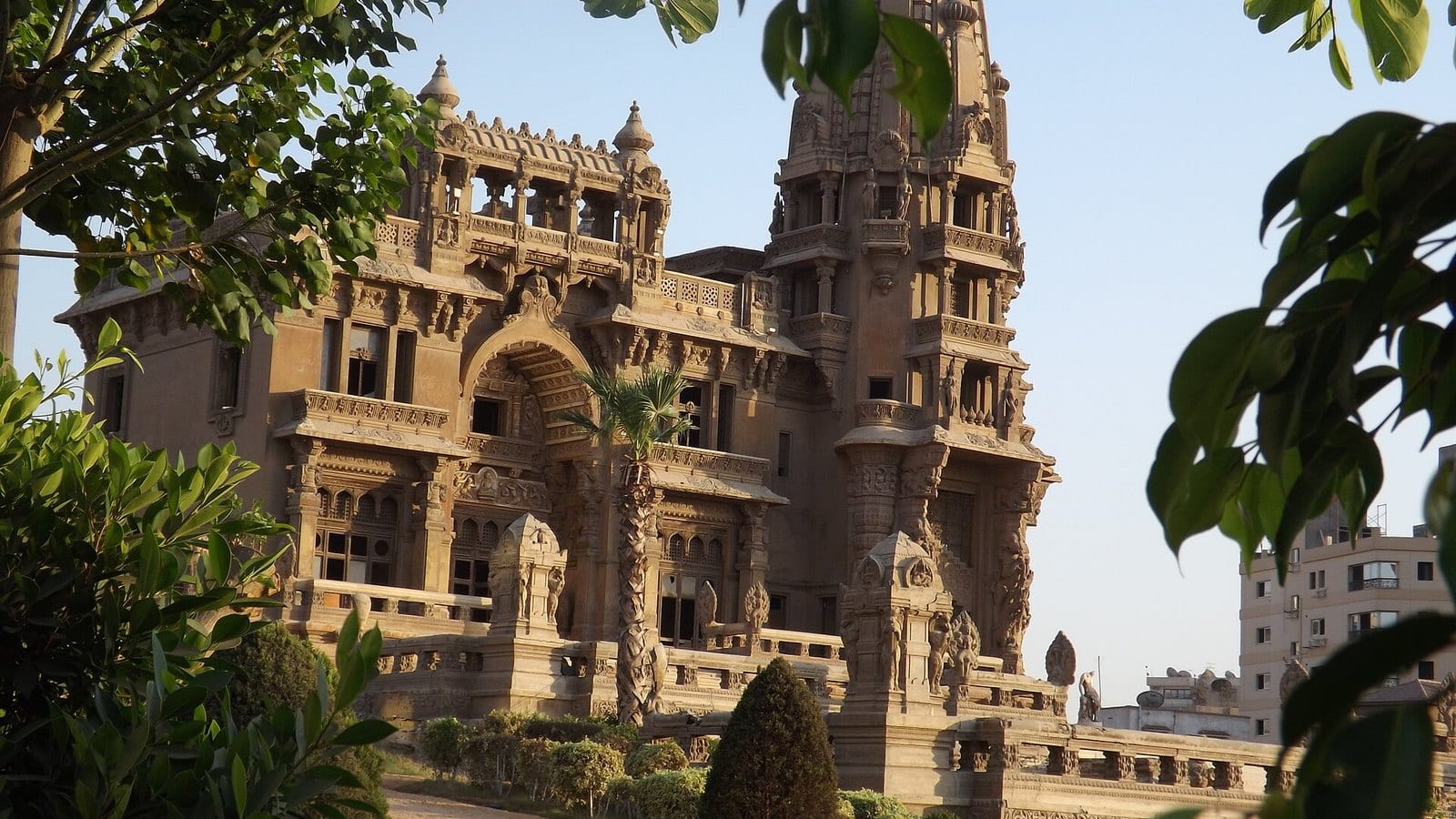
Photo : Gr8worldfromgr8god — CC BY-SA 3.0, Wikimedia Commons
Cairo · Heliopolis
Baron Empain Palace
A concrete Hindu temple on the airport road, long left to rumour.
The Belgian industrialist Édouard Empain created Heliopolis in the years around 1905: a new town in the desert, with its own tramway and electricity company. For himself he commissioned the French architect Alexandre Marcel to build a villa unlike anything else in Cairo, finished around 1911: square plan, reinforced concrete, galleries on slender columns, and decoration borrowed from the Hindu temples of Orissa and from Angkor — elephants, dancers, deities, serpents. The story goes that the tower turned on rails to follow the sun; no visit has ever managed to kill it off. Abandoned for decades, the palace fed the neighbourhood's legends before the state bought it, restored it, and opened it to the public in 2020 with an exhibition on the history of Heliopolis.
The extra bit
The rooms are bare: the architecture and the exhibition make the visit, not the furniture. Leave time for the walk round the outside, where the finest carving is, then continue to the Heliopolis basilica a kilometre away — Empain is buried in its crypt.
Know before you go
The crowd here is Cairene rather than foreign, and at weekends the queue lengthens at the gate. The palace is ringed by Al-Orouba street and its fast lanes: arrive on the right side; there is no crossing it on foot. Coming from the airport it is on the way into town, and an hour is enough — the easiest stop to fit into an arrival day.