Photo : AmiraAdel93 — CC BY-SA 4.0, Wikimedia Commons
Cairo · Darb el-Ahmar
The Tentmakers' Street
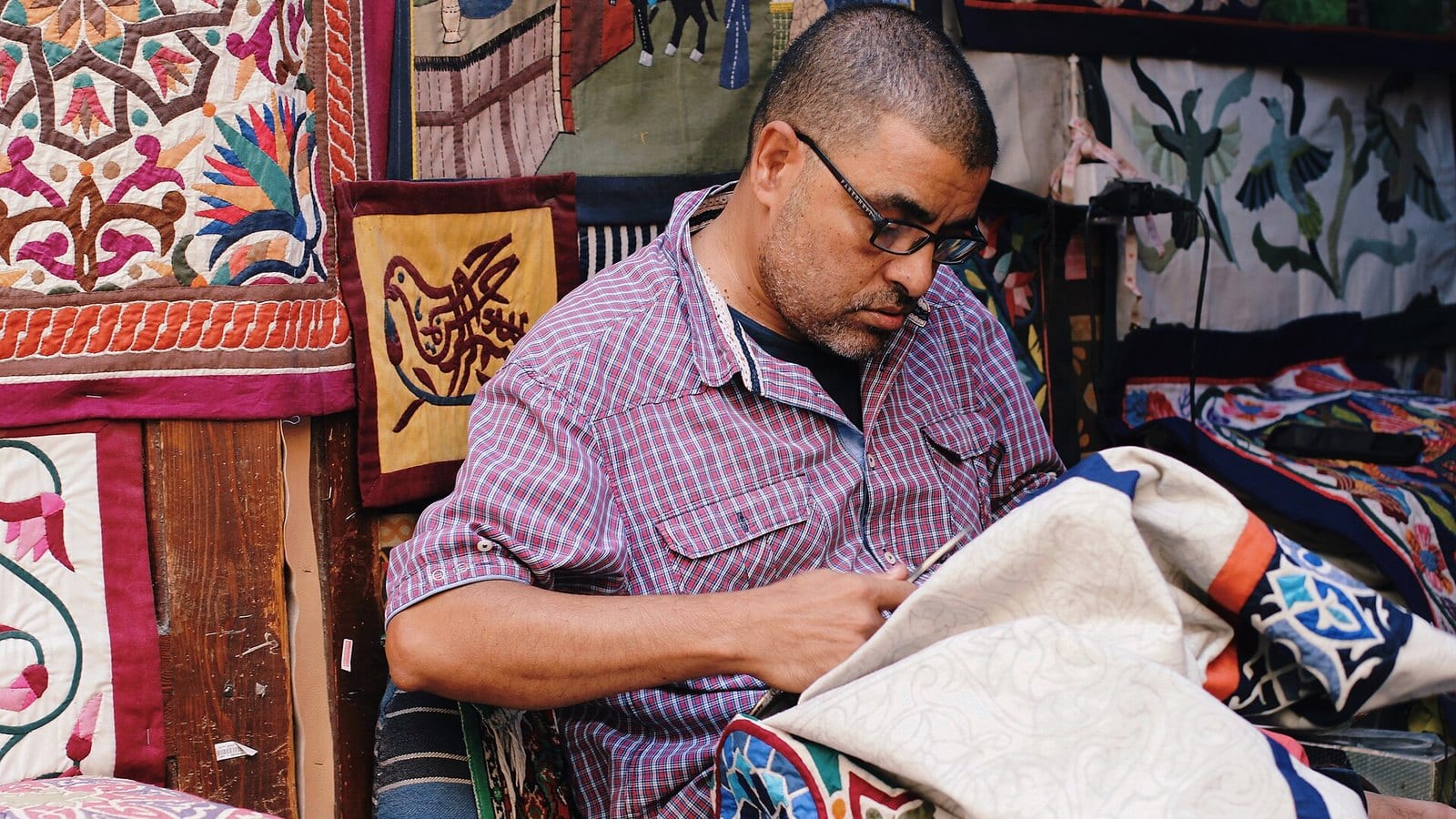
The covered tentmakers' street south of Bab Zuweila: appliqué still sewn by hand.
Past Bab Zuweila the street closes in under an Ottoman-era wooden roof and the shops face each other, open like alcoves. The trade that named it is khayamiya: appliqué hangings, sewn by hand, once used to raise the great marquees of weddings, mourning and Ramadan. Some of that work is machine-printed now, but a few workshops still sew with a needle — the craftsman sits on his bench among his bolts of cloth, and you can watch him work without buying anything. What is offered to a visitor has changed size: cushion covers, panels and quilts rather than a ten-metre tent.
The extra bit
Take it straight after Bab Zuweila, the gate that closes the street at its northern end. Ask to see the back of a panel: stitches per centimetre are what separate sewn work from printed, and the price follows.
Know before you go
You do bargain here, but a large hand-sewn panel is weeks of work, and haggling over a workshop piece the way you would in Khan el-Khalili makes no sense. Cash, and ask before you pay whether the workshop can invoice or ship. The roof keeps the street in a pleasant gloom, but the shops close early and many pull the shutter down on Friday. Check the stitching: printed and sewn are sometimes sold side by side in the same shop.