Photo : Cherif hegazy — CC BY-SA 4.0, Wikimedia Commons
Cairo · Al-Muizz, Gamaliya
Katkhuda Sabil-Kuttab
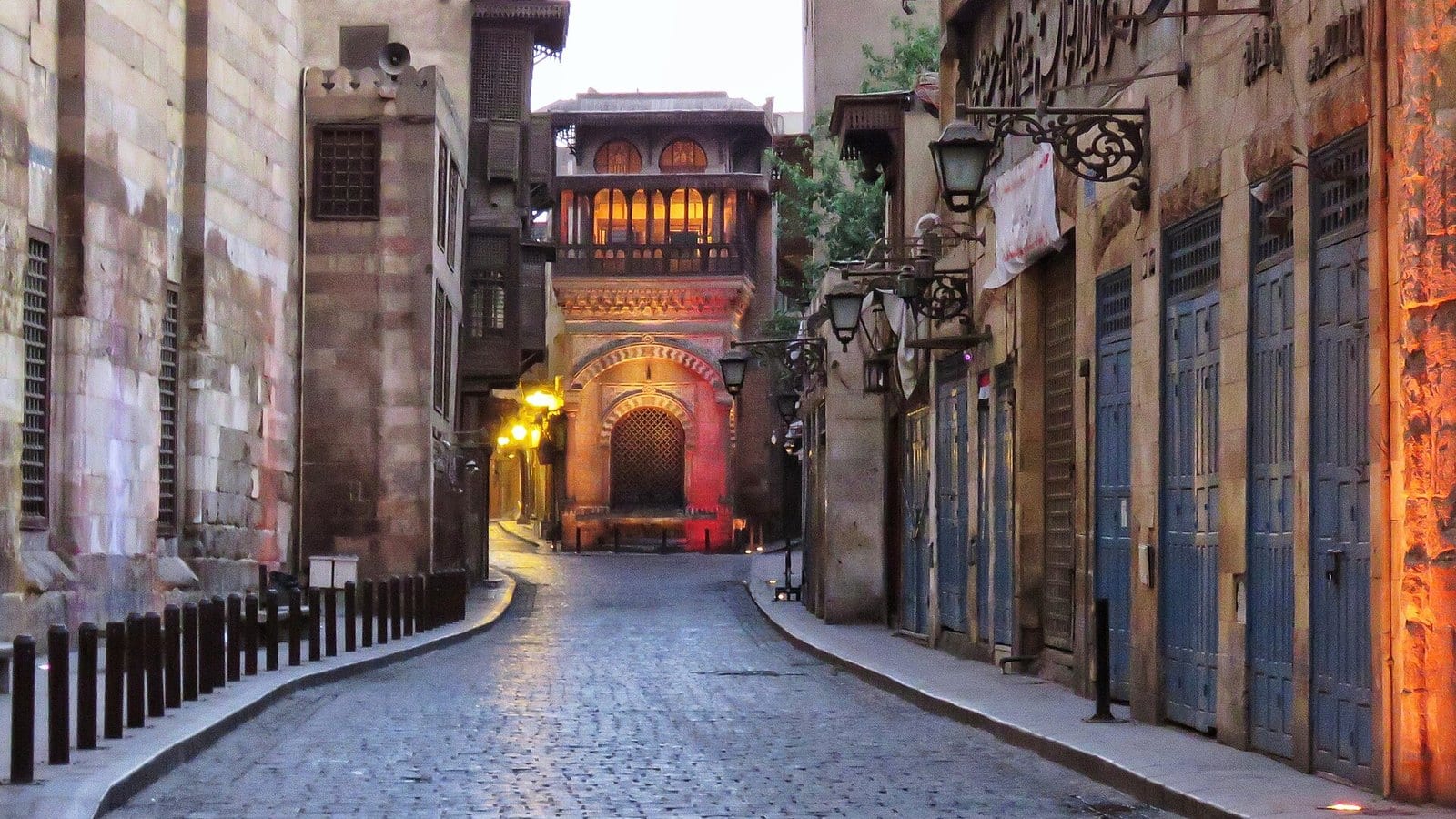
A public fountain of 1744 at the fork of al-Muizz, the Quran school above it.
Abd al-Rahman Katkhuda, a senior officer of Ottoman Egypt, raised this sabil-kuttab in 1744 where al-Muizz Street splits in two: the building takes the head of the fork and is read from both sides. Below is the fountain — behind the grilles a cistern was kept filled all year for passers-by to drink from, an act of piety and a public utility at once. Above, under the projecting wooden eaves, is the room where the children of the quarter learnt the Quran. The inlaid marble, the carved inscriptions and the copper grilles are all at eye level, from the street, without going in; the tilework lines the inside of the fountain chamber. In the evening the floodlights hit it square on and it becomes the marker for this end of the street.
The extra bit
Come by at dusk: shopkeepers sluice the paving outside their shops, the lighting comes on, and the sabil is reflected in the wet street. It is also the hour when you can do half of al-Muizz without the sun on your head.
Know before you go
The fountain and the school upstairs do not open on any regular pattern, and this guide cannot tell you their hours: if the interior matters to you, ask the keeper at the Qalawun complex two minutes away, or at the ticket window of the monument next door. From outside, all of it shows. Don't confuse it with the street's other fountains: Abd al-Rahman Katkhuda built more than one sabil in Cairo.