Photo : Ovedc — CC BY-SA 4.0, Wikimedia Commons
Cairo · Old Cairo, Fustat
Ben Ezra Synagogue
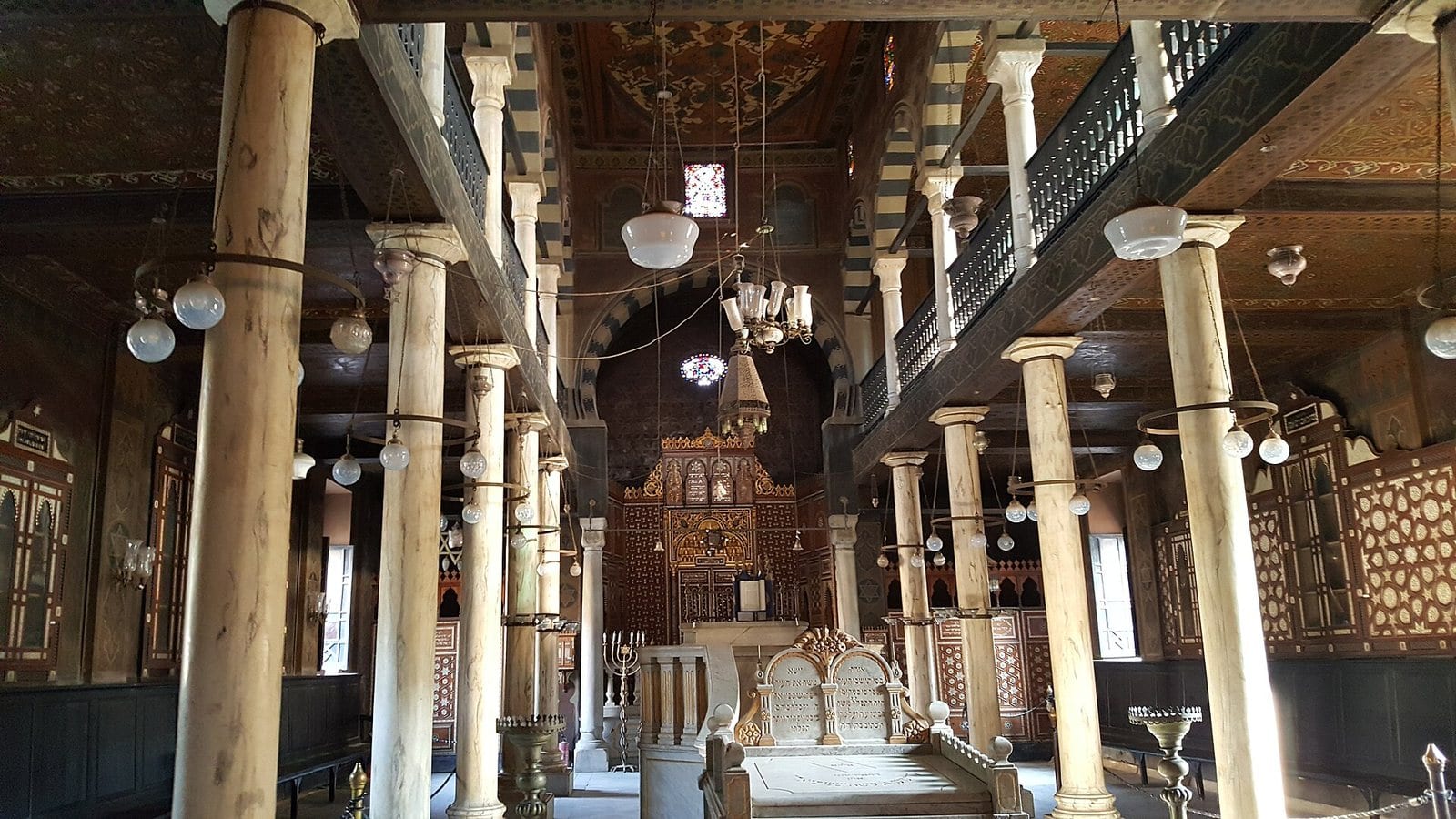
The synagogue of the Cairo Geniza, whose fragments are now in Cambridge.
The building began as a church, sold to the Jewish community of Fustat in the late ninth century to settle a tax bill; what you visit — two rows of columns and a women's gallery — is largely a medieval rebuilding. Its fame rests on a chamber set into the back wall: the geniza, where any paper bearing the name of God was laid aside rather than destroyed. Hundreds of thousands of fragments piled up there between the eleventh century and the late nineteenth — contracts, merchants' letters, dowry lists, prescriptions — and their recovery handed historians one of the richest sources on Jewish and Mediterranean life in the Middle Ages. Maimonides lived and taught in this quarter. Tradition holds that this is where Moses was drawn from the water; nothing supports it.
The extra bit
The visit takes twenty minutes: fit it in between the Hanging Church and the Coptic Museum rather than making it a trip of its own.
Know before you go
The geniza is empty: the fragments went to Cambridge and other libraries, and what you see here is the room, not the hoard. No congregation prays here any more; the place has become a monument, guarded, with a check at the door. Photography inside is normally not allowed, so ask before taking out a phone.