Photo : Tom Horton from Shanghai, China — CC BY-SA 2.0, Wikimedia Commons
Fayoum · Wadi El Hitan
Whale Valley
Skeletons of whales with legs, left in the sand exactly where they were uncovered.
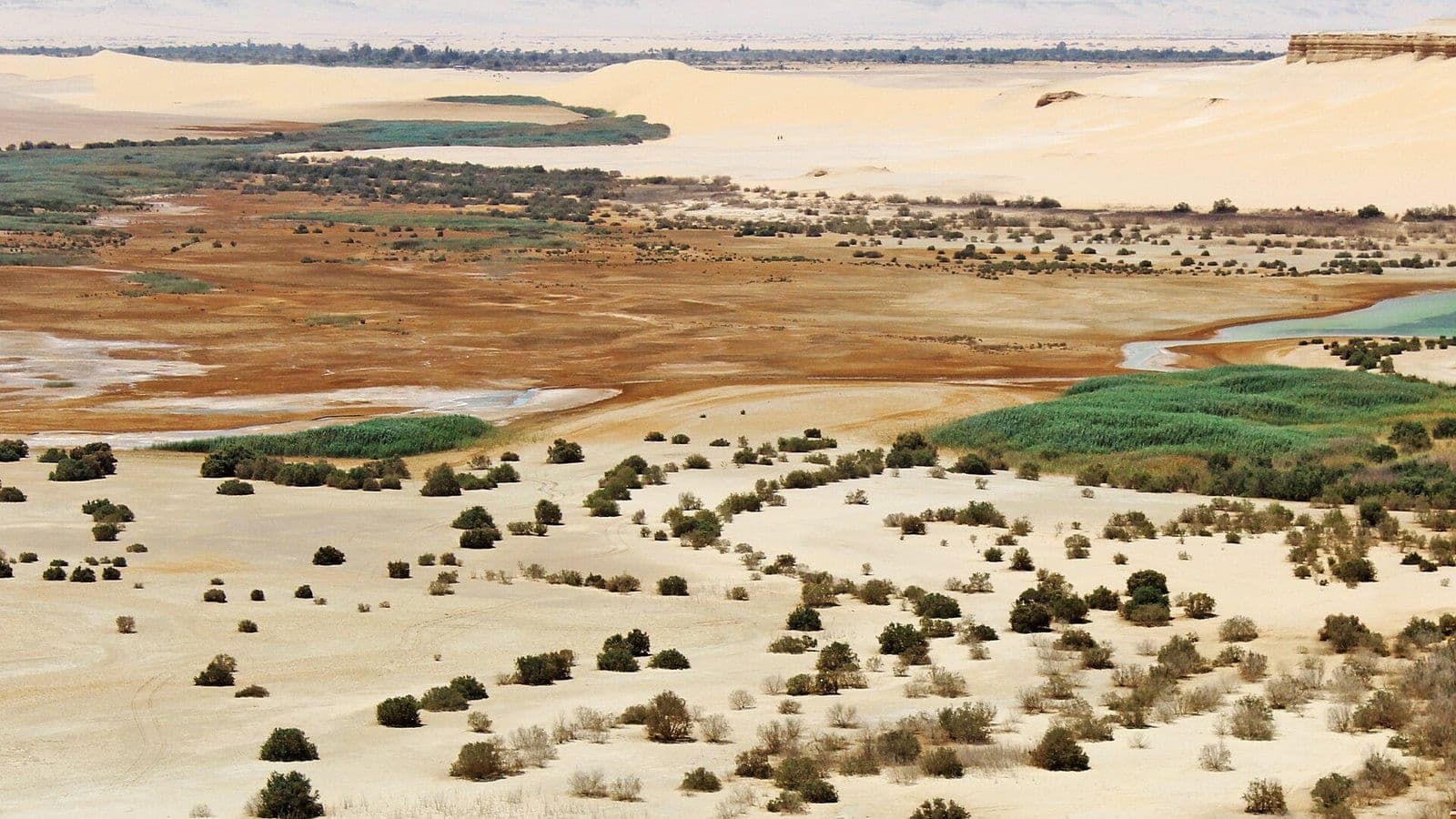
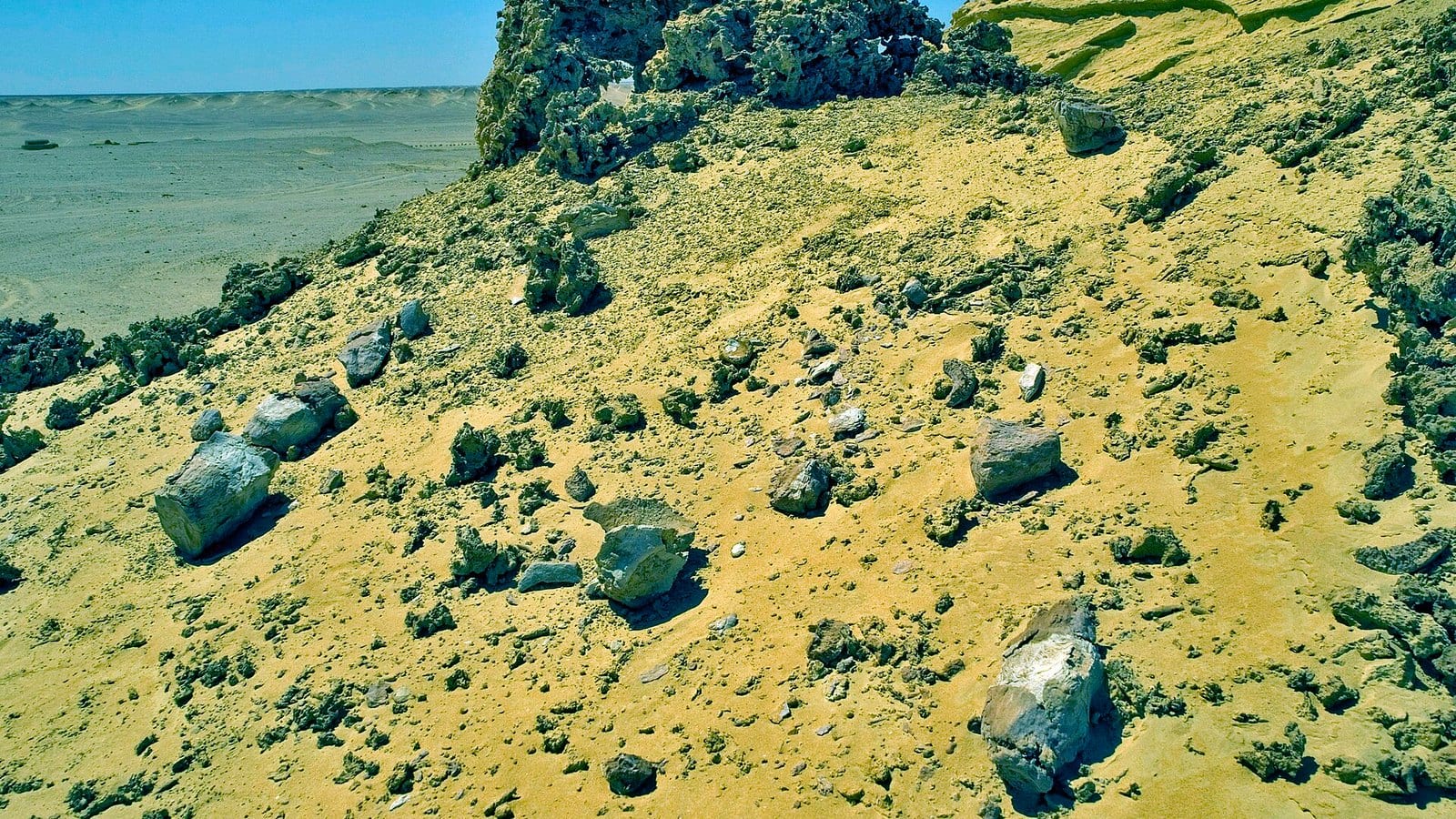
The sand in this corner of the desert, beyond Wadi El Rayan, was a sea floor at the end of the Eocene. What settled there now shows at the surface: skeletons of archaeocetes — whales that still had hind limbs — and around them shark teeth, shells, fossilised mangrove roots. The finds were not carried off to a museum; they were left where they were uncovered, along a few kilometres of marked trail between sandstone knolls. That is what the World Heritage listing of 2005 rests on: the move of whales from land to sea can be read here in the rock, specimen by specimen.
The extra bit
There is not a metre of shade on the trail: be at the entrance as it opens, and the walk is done before the ground heats up. Wadi El Rayan sits on the same road — keep it for the way back.
Know before you go
The site sometimes carries a ticket separate from the Wadi El Rayan one: ask at the window of its barrier, which the road goes through before the site. You pick nothing up: a fossil moved twenty centimetres has lost what made it worth anything, and the wardens on the trail watch for it. No water and no food on the site, and both sand and gravel get hot — closed shoes. The last stretch of road crosses open desert: ask at that same window about its condition before taking a saloon car onto it, and do not drive it alone late in the day.