Photo : Faris knight — CC BY-SA 4.0, Wikimedia Commons
The Delta and the north coast · Wadi el-Natrun
Wadi el-Natrun
A depression of salt lakes on the desert road, and four monasteries still lived in.
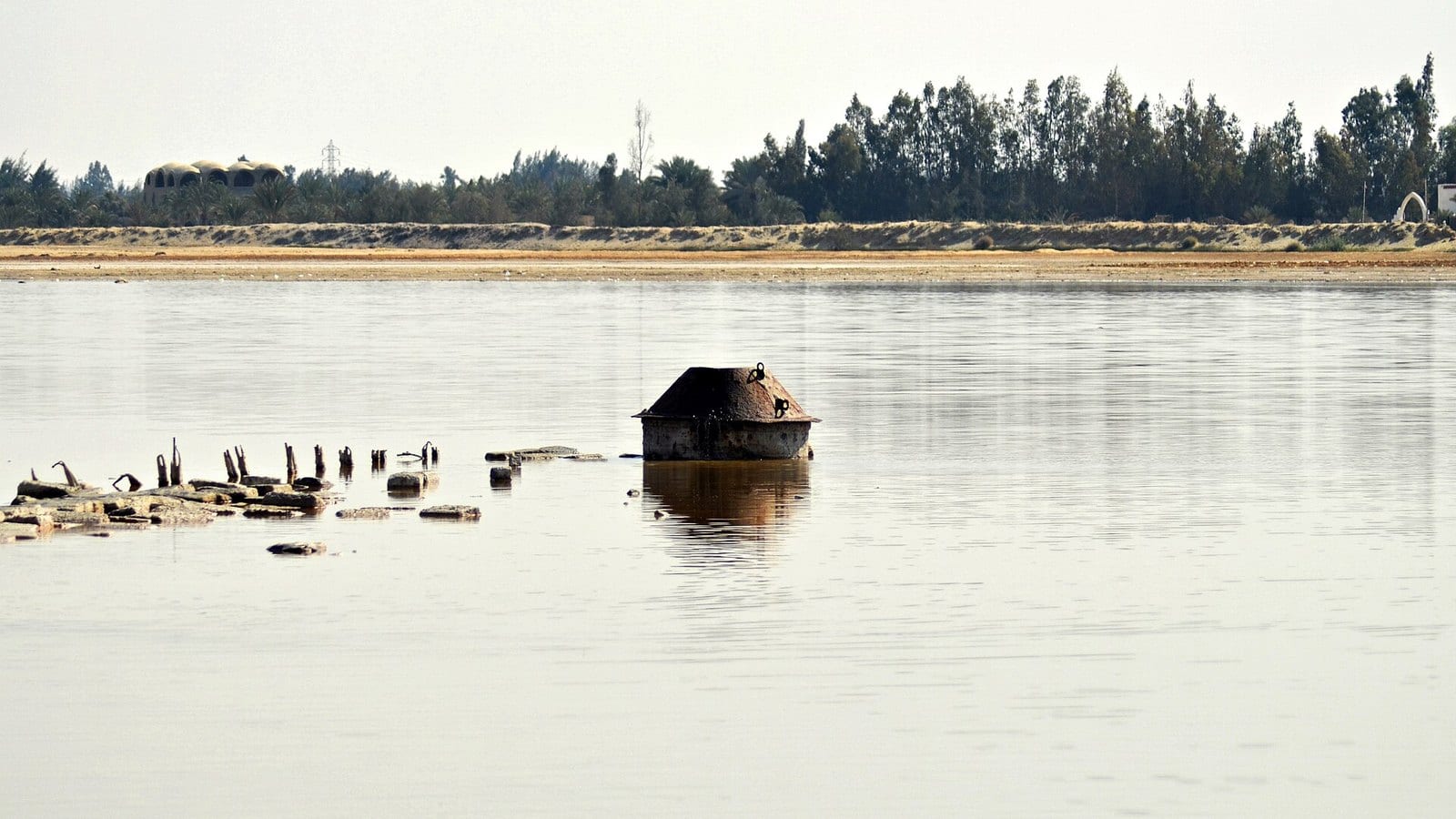
The depression opens halfway along the desert road between Cairo and Alexandria, below sea level, with the chain of salt lakes that gave the place its name: this is where natron came from, the salt used on the mummies. The ground goes white around the water, the air smells of brine, and the level moves: huts and trees stand in the water. This is also the Scetis of the old texts, one of the cradles of Christian monasticism: four monasteries, heirs to the first desert communities, are still lived in, among them Anba Bishoy and the Syrians, a few minutes apart. What you see there is old churches, keep towers and irrigated gardens, in the middle of flat desert.
The extra bit
Leave Cairo early: the monasteries receive during the day and the afternoon goes quickly. Start with Anba Bishoy and the Syrians, all but next door to each other, then go down to the lakes at the end of the day, when the salt crust takes the colour of the sky.
Know before you go
These are lived-in monasteries, not museums: covered dress for men as much as women, quiet inside the churches, and no photographs without asking. Some of them suspend visits during the fasting retreats, and the dates differ from one community to another: this guide does not follow them, so have your hotel or your driver ring the monastery the day before. You reach them in an ordinary car off the desert road, but the tracks down to the lake shores are sandy, and taking one without a 4×4 is a poor idea. Around the monasteries there is little more than a souvenir stall and a café; the water and the hat you bring yourself, and nothing is paid by card.