Photo : Zakaria Rabia — CC BY-SA 4.0, Wikimedia Commons
Aswan · Abu Simbel
Abu Simbel
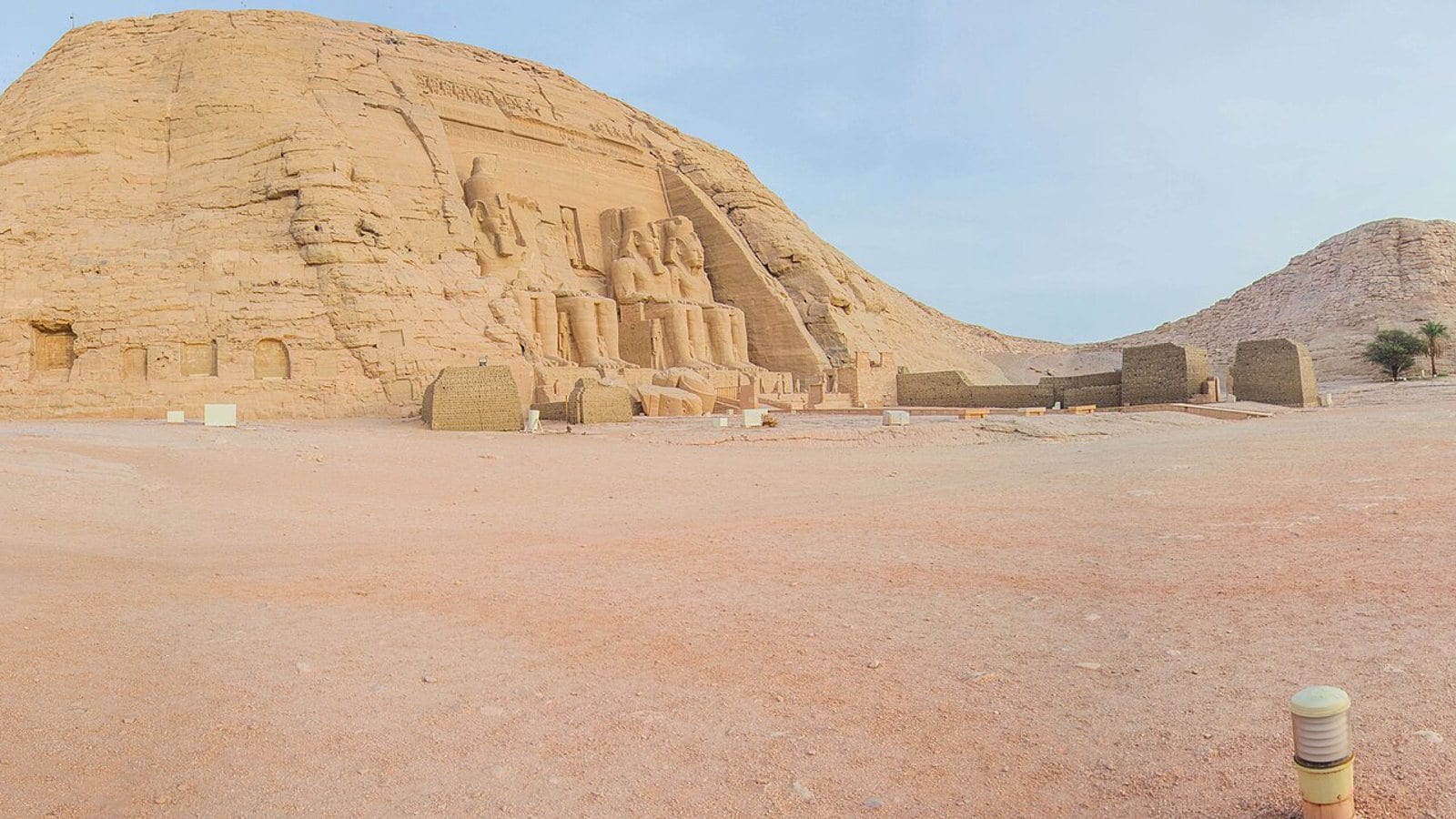
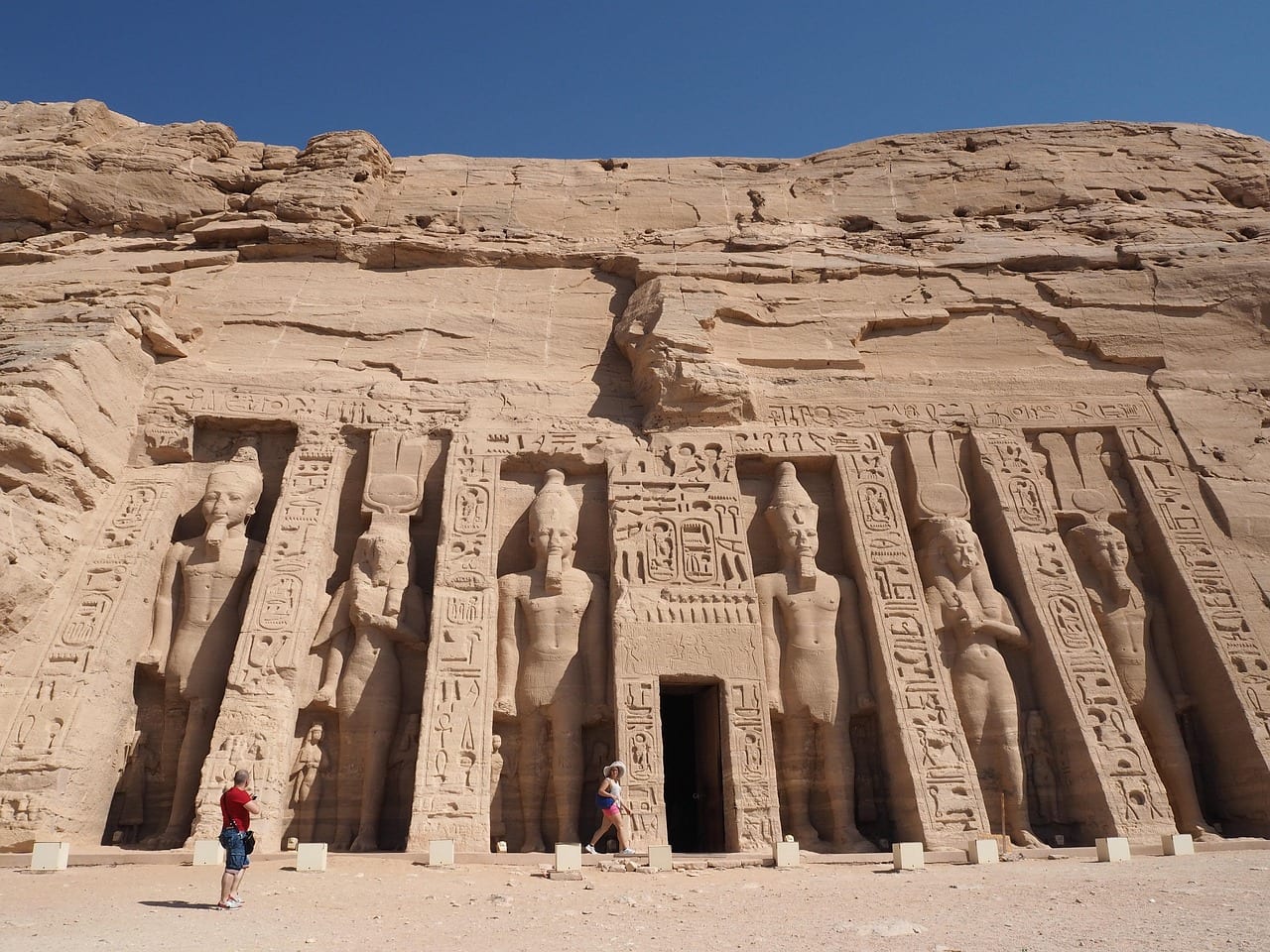
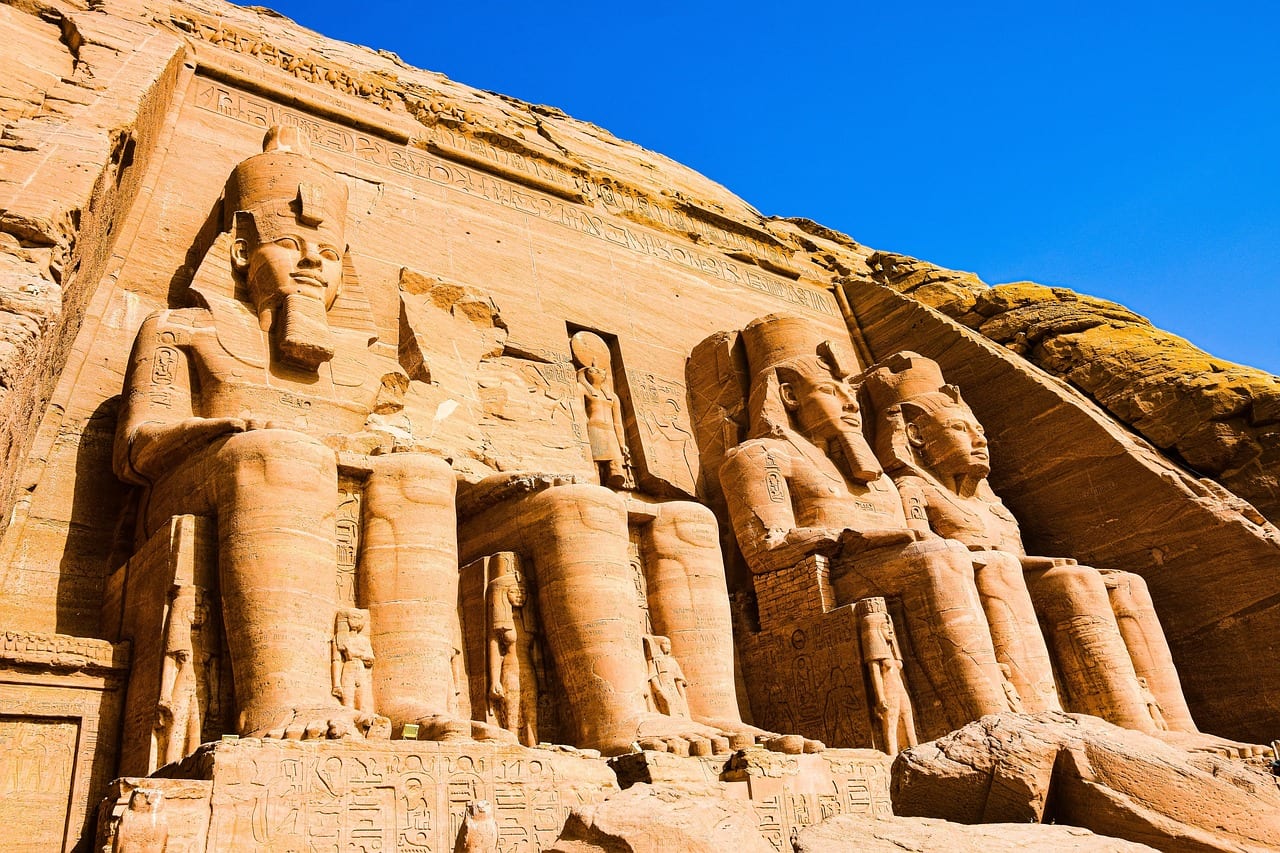
Two temples cut into the cliff by Ramesses II, then sliced apart and rebuilt higher up, 280 km south.
Ramesses II, Nineteenth Dynasty, thirteenth century BC: a great temple to his own glory, guarded by four seated colossi some twenty metres high, and a second, smaller one for Hathor and Queen Nefertari. The rising Lake Nasser was going to swallow them; between 1964 and 1968 a UNESCO campaign sawed them into blocks and rebuilt them some sixty metres higher and two hundred metres back, inside an artificial hill hollowed into a dome behind the façade. Twice a year, in February and October, the sun runs the length of the great temple to the sanctuary. This is the southernmost point of the classic Egyptian trip, and it is paid for in hours on the road.
The extra bit
Two ways to get there, and they don't make the same day: by road, leaving Aswan around three or four in the morning, arriving with the first light on the façade; by air, under an hour's flight, two hours on site, back for lunch. The road is long and empty; the flight is dear but hands you the day back.
Know before you go
This is a journey, not a visit: about three hours of desert out, as much back, and almost nothing in between. The tour groups arrive early, within minutes of one another: the façade is quiet for a quarter of an hour, then not at all. The interior is dark, and photography is restricted, sometimes charged for.