Photo : Holger Uwe Schmitt — CC BY-SA 4.0, Wikimedia Commons
Aswan · Nile
Sehel Island
A granite jumble covered in inscriptions: floods, expeditions, a seven-year famine.
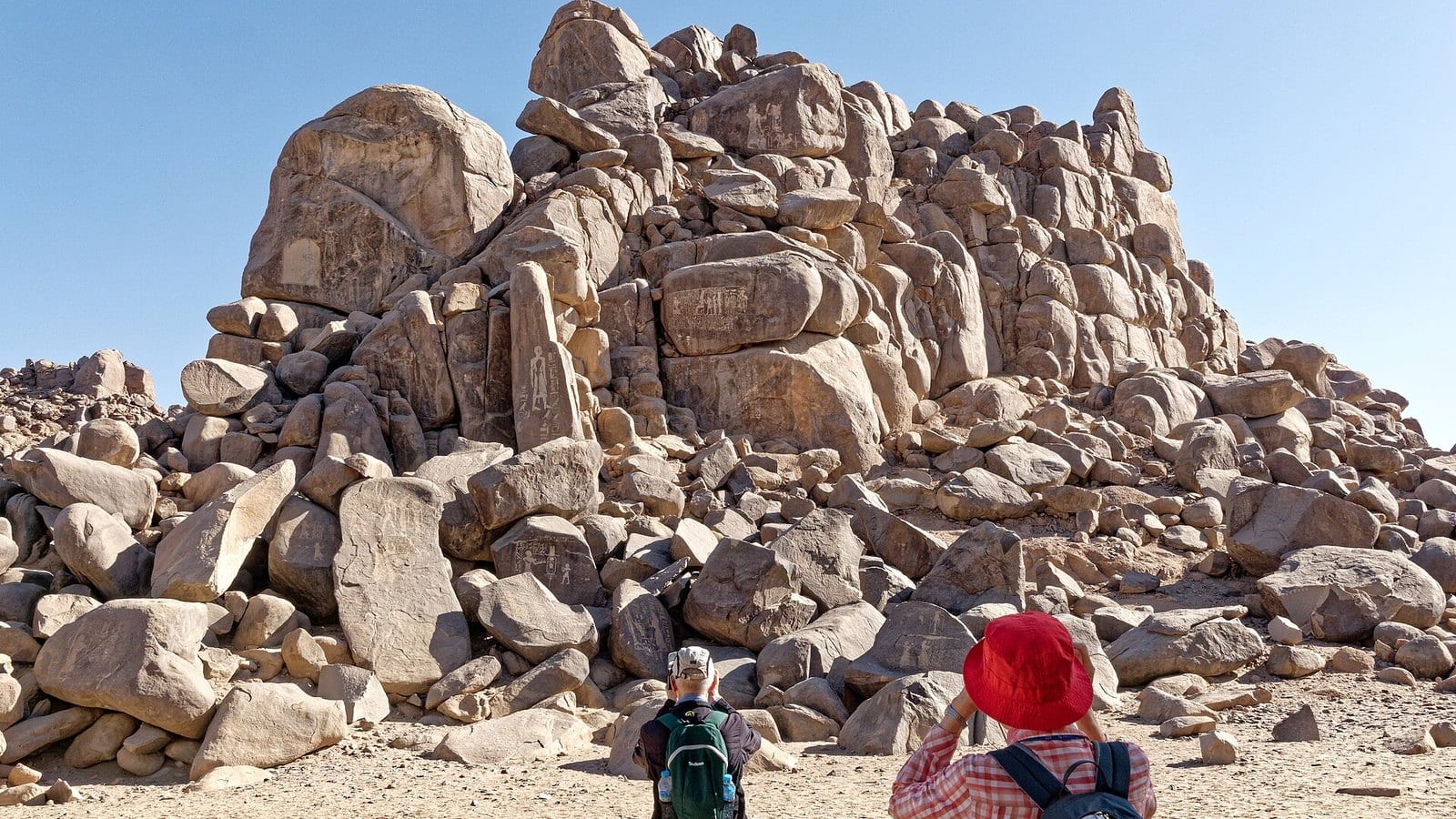
The island is two rises caught in the rocks of the first cataract, south of the town, and its granite boulders look as though they had been tipped there. Their smooth faces carry hundreds of inscriptions cut over some three thousand years: officials on their way to Nubia, expedition records, royal names, prayers left by people passing through. The best known is the Famine Stela, a Ptolemaic text that puts into the mouth of Djoser, Third Dynasty, an account of seven years of drought and a grant of land to the temple of Khnum on Elephantine — an inscription carved more than two millennia after the king it names. A Nubian village occupies the island, children play among the boulders, and nothing on the ground tells you this is a site.
The extra bit
Take water, and get someone from the village to walk you to the Famine Stela: nothing marks it, and alone you will circle for a long time among boulders that all look alike. In the morning the stone still holds the cool of the night and the inscriptions read better, with the light coming in from the side.
Know before you go
Nothing here is laid out for visitors: no signs, no marked path, no shade. The real cost is the boat: agree the round trip as one deal, waiting time included, and in cash, as everywhere on this river. The boulders are tall, rounded and slippery, and you climb with your hands: no pushchairs, no wheelchairs. If the inscriptions do not interest you, the island has nothing else on offer — this is not a walk for the views.