Aswan · Souk
Aswan souk
One long covered street a block back from the river: hibiscus, Nubian basketry, spices.
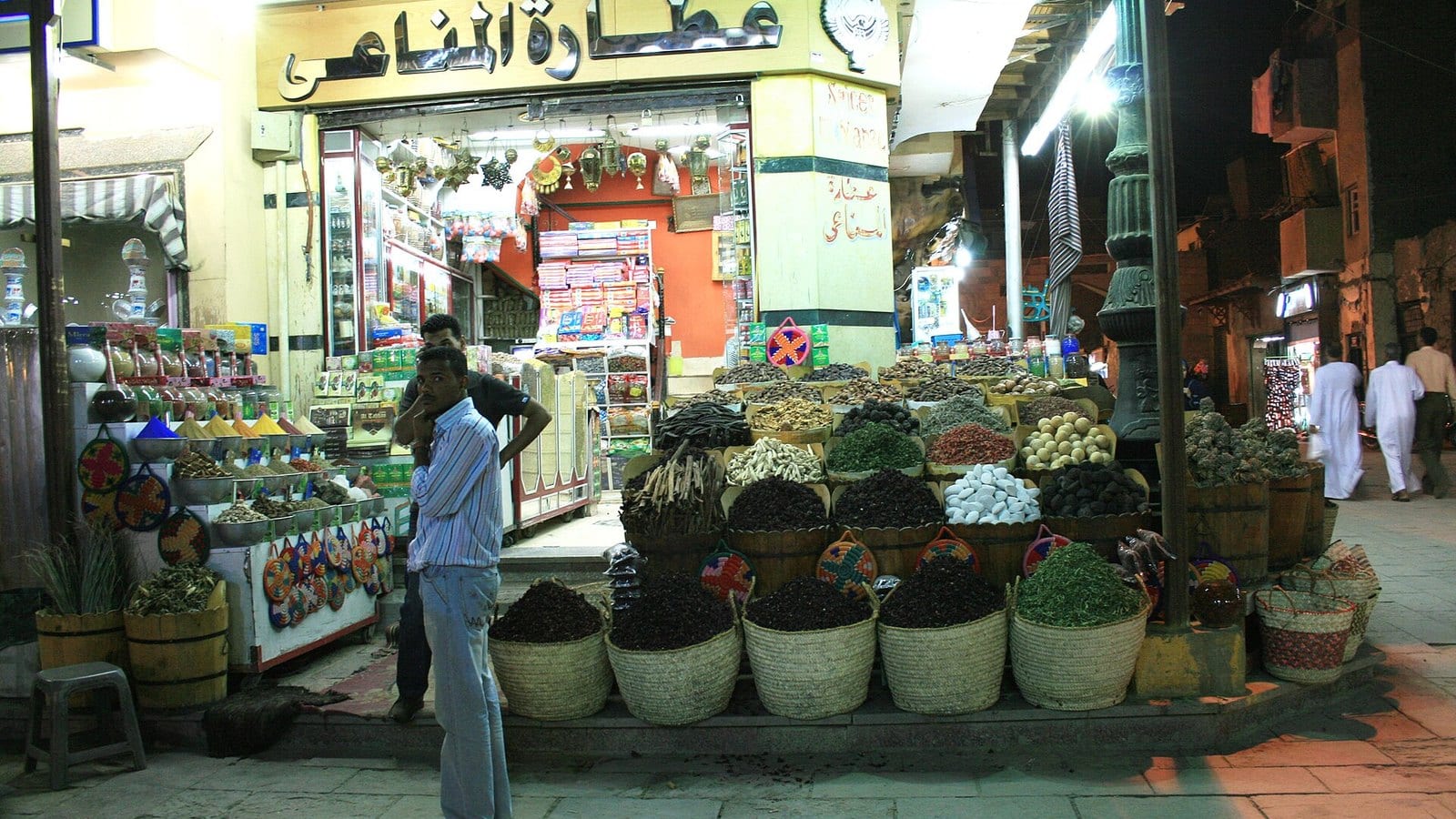
The souk street runs parallel to the corniche, a block back from the river, from the station end southwards, and is roofed in places. It is the town's market before it is the visitors': vegetables and shoes at one end, spices and souvenirs at the other. Worth carrying home: Upper Egyptian hibiscus, dried tamarind, chillies, henna, the palm-leaf and doum baskets that come in from the Nubian villages, indigo-dyed cloth. Not worth it: the "saffron" sold by the handful, and essential oils at round-number prices. Haggling is universal, the first figure bears no relation to the last, and you will be hailed every few steps — not aggressively, but without a pause either.
The extra bit
Come after dark: the street is lit, the heat has dropped, and this is when local people do their shopping — which shows in the first price you are quoted. Start at the northern end, by the station, where the shops serve the town first, and work south: the souvenir trade closes in as you get nearer the centre.
Know before you go
The pyramids of coloured powder are shop-window dressing: what you buy gets weighed into a bag, and hibiscus is judged by smell, not colour. The "saffron" sold by the handful is safflower: it colours but adds no scent. Haggling offends nobody, even when you halve the first price. Cash at most stalls, and bring small notes: change for a large one is rarely to hand.