Photo : Gildas Guionnet — CC BY-SA 4.0, Wikimedia Commons
Luxor · West bank
Deir el-Medina
The village of the men who cut the royal tombs: their houses, their tombs, their accounts.
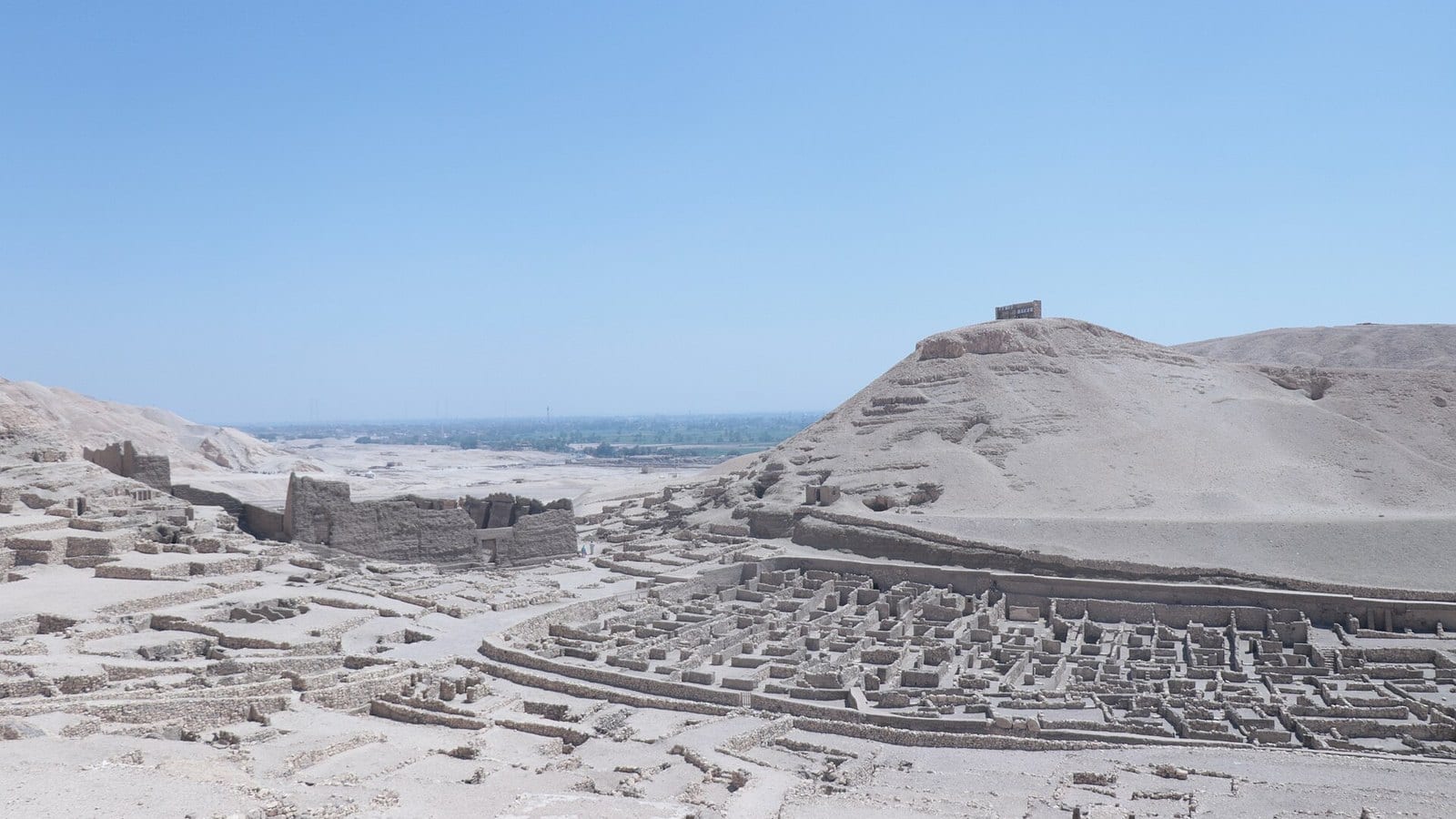
This is where the stonecutters, draughtsmen and scribes who cut and painted the west-bank tombs lived, in a walled village the texts call Set-Maat, the place of truth. The stone walls set against the hillside still lay out the streets and the plan of the houses, room by room. The thousands of limestone flakes and potsherds covered in writing found on the site tell their daily business: grain rations, days off work, quarrels between neighbours, and the time the deliveries ran late under Ramesses III and the gangs stopped work. Above the village their own tombs, small and topped with a chapel and a little pyramid, are painted in brighter colours than the kings'. The present name comes from the Coptic monastery installed much later in the temple of Hathor, at the north end of the enclosure.
The extra bit
Go up first onto the path that runs above the village, if it is open: from up there the street plan reads at a glance, which it no longer does once you are walking between the walls. Then come back down to the workmen's tombs.
Know before you go
The painted tombs close in rotation and some need a ticket on top of the site's: ask at the window before you climb. There is not a metre of shade inside the enclosure, and the painted chambers are narrow and low. The temple of Hathor stands in the same enclosure, to the north, and it is roofed, which is rare here.