Photo : Holger Uwe Schmitt — CC BY-SA 4.0, Wikimedia Commons
Luxor · Corniche
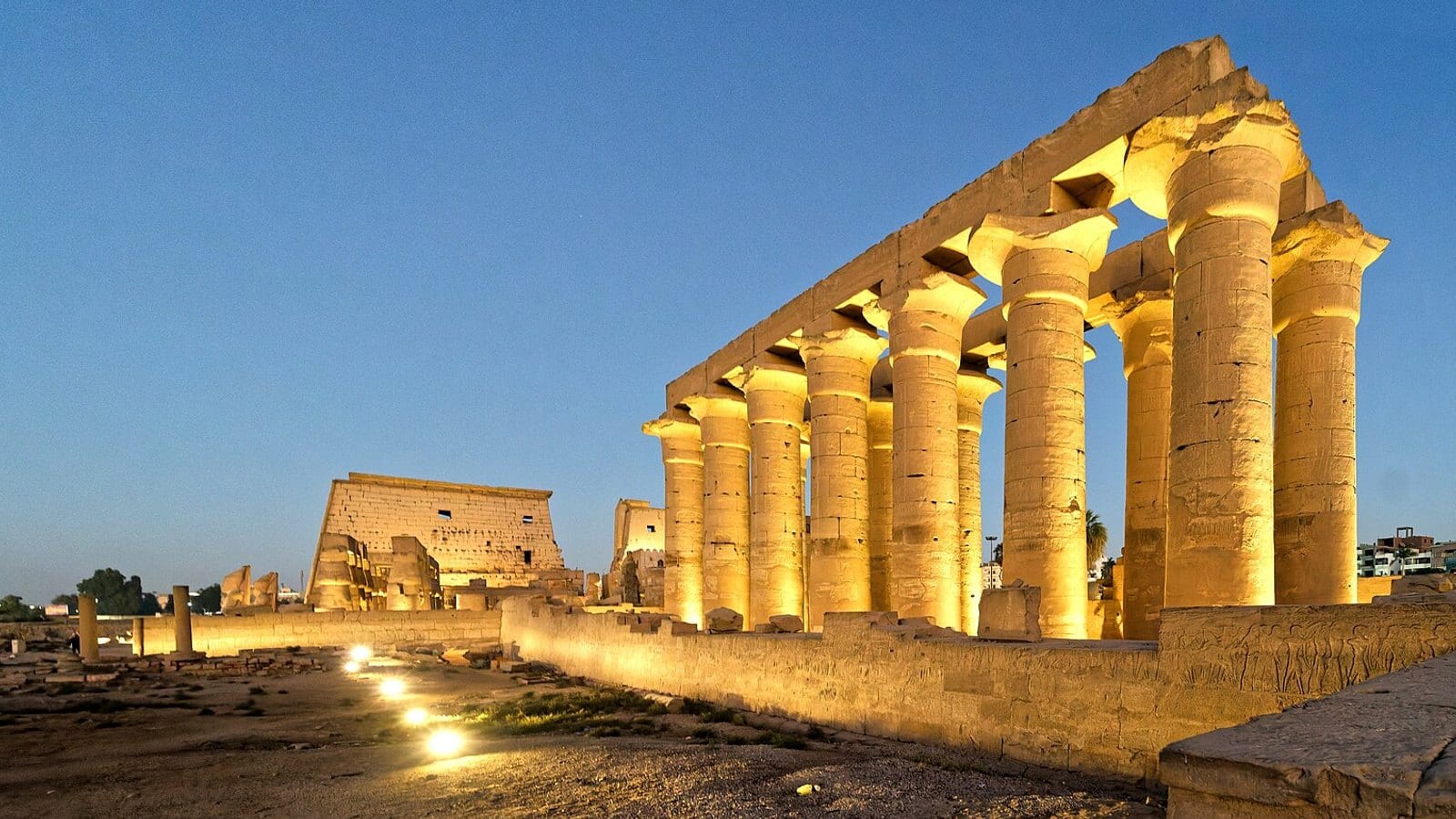
Luxor Temple
A temple in the middle of town, open after dark, with a working mosque sitting in its courtyard.
Amenhotep III began it in the fourteenth century BC; Ramesses II added the great pylon, its seated colossi and two obelisks, only one of which still stands. The avenue of sphinxes running almost three kilometres to Karnak has been cleared along its whole length. In the first court, the mosque of Abu al-Haggag stands several metres above the pharaonic floor: the temple was buried to that height, and the site was occupied in turn by a Roman garrison, a church and a mosque. The other obelisk has stood on the Place de la Concorde in Paris since 1836.
The extra bit
Come at nightfall, when the floodlights take over from the sun and lift the columns and reliefs out of the dark. Then, if the avenue of sphinxes is open that evening, walk a few hundred metres up it towards Karnak before turning back.
Know before you go
You reach it on foot from most Corniche hotels — no taxi, no river crossing. The mosque courtyard cannot be entered from inside the temple: it is a place of worship, with its own door higher up. The horse-drawn carriages waiting outside quote one price as you climb in and another on the way back.