Photo : Holger Uwe Schmitt — CC BY-SA 4.0, Wikimedia Commons
Luxor · West bank
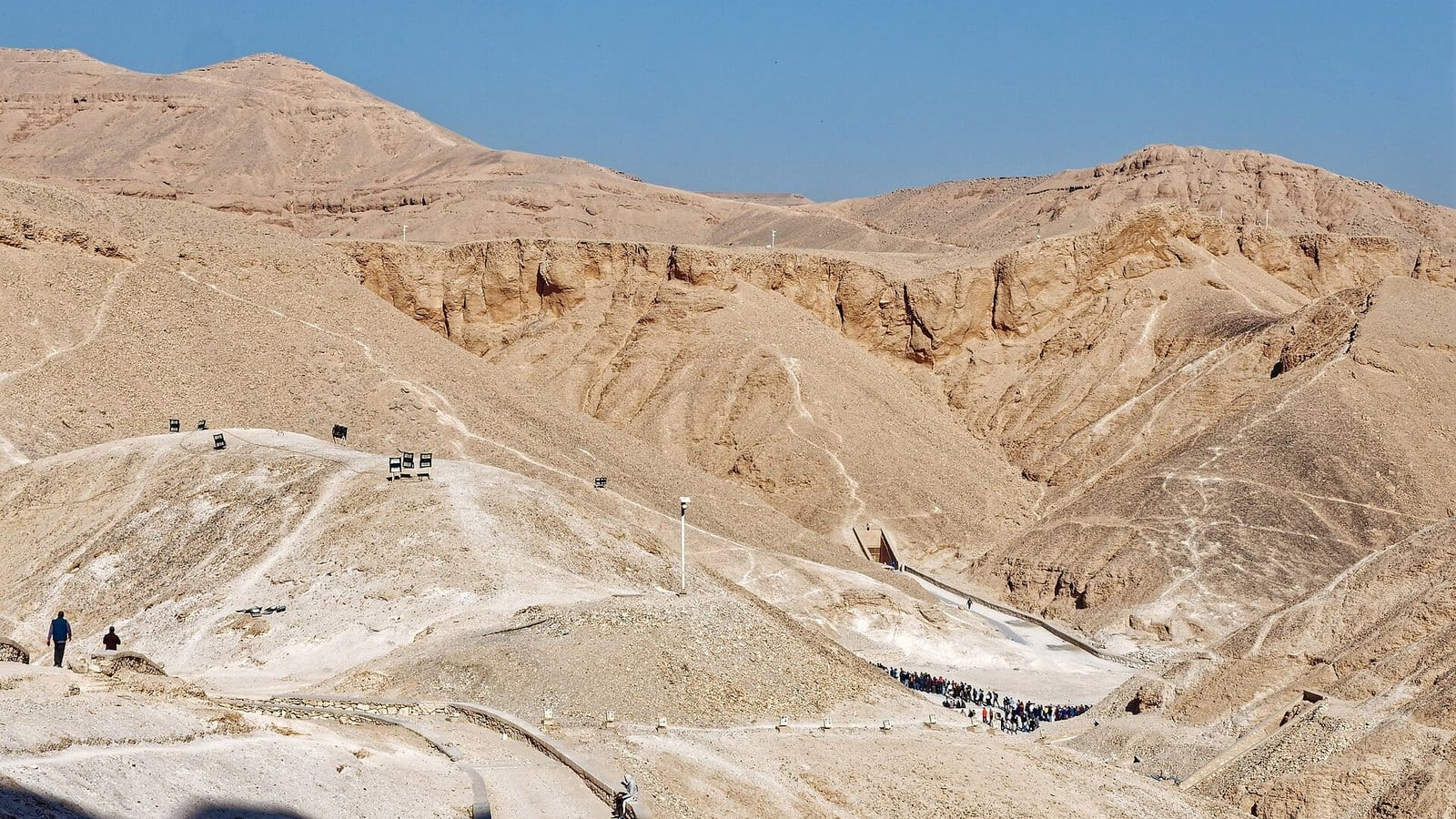
Valley of the Kings
Over sixty tombs in a wadi without a scrap of shade, and a ticket that opens only a handful.
From the Eighteenth Dynasty the pharaohs gave up the pyramid for a hidden tomb cut into the rock, below the natural peak of el-Qurn, which is itself pyramid-shaped. The corridors are covered with funerary texts and figures whose colour has barely shifted: no light, no rain. Tutankhamun's tomb, found by Howard Carter in 1922, is one of the smallest in the valley — the treasure is now at the Grand Egyptian Museum in Giza, and what remains here is the sarcophagus, the mummy and four walls. Seti I's, by contrast, runs down more than a hundred metres and is decorated end to end.
The extra bit
The deep tombs hold the heat like a steam room: start with the one that goes furthest down, at opening, after the rock has had a night to cool. Take the shuttle from the ticket office too — walking up buys you twenty minutes of sun and nothing else.
Know before you go
The standard ticket admits you to only a few tombs, chosen from those open that day, and the list rotates to rest them. Tutankhamun, Seti I and Nefertari — the last in the Valley of the Queens — each cost extra. Photography inside long required a separate ticket, so ask the guard before you take out your phone. There is no shade and nothing to drink beyond the visitor centre. You do the west bank by taxi hired for the day, agreeing the fare and the full list of sites in the morning; the local ferry crosses for pennies but leaves you on the other side without a car.