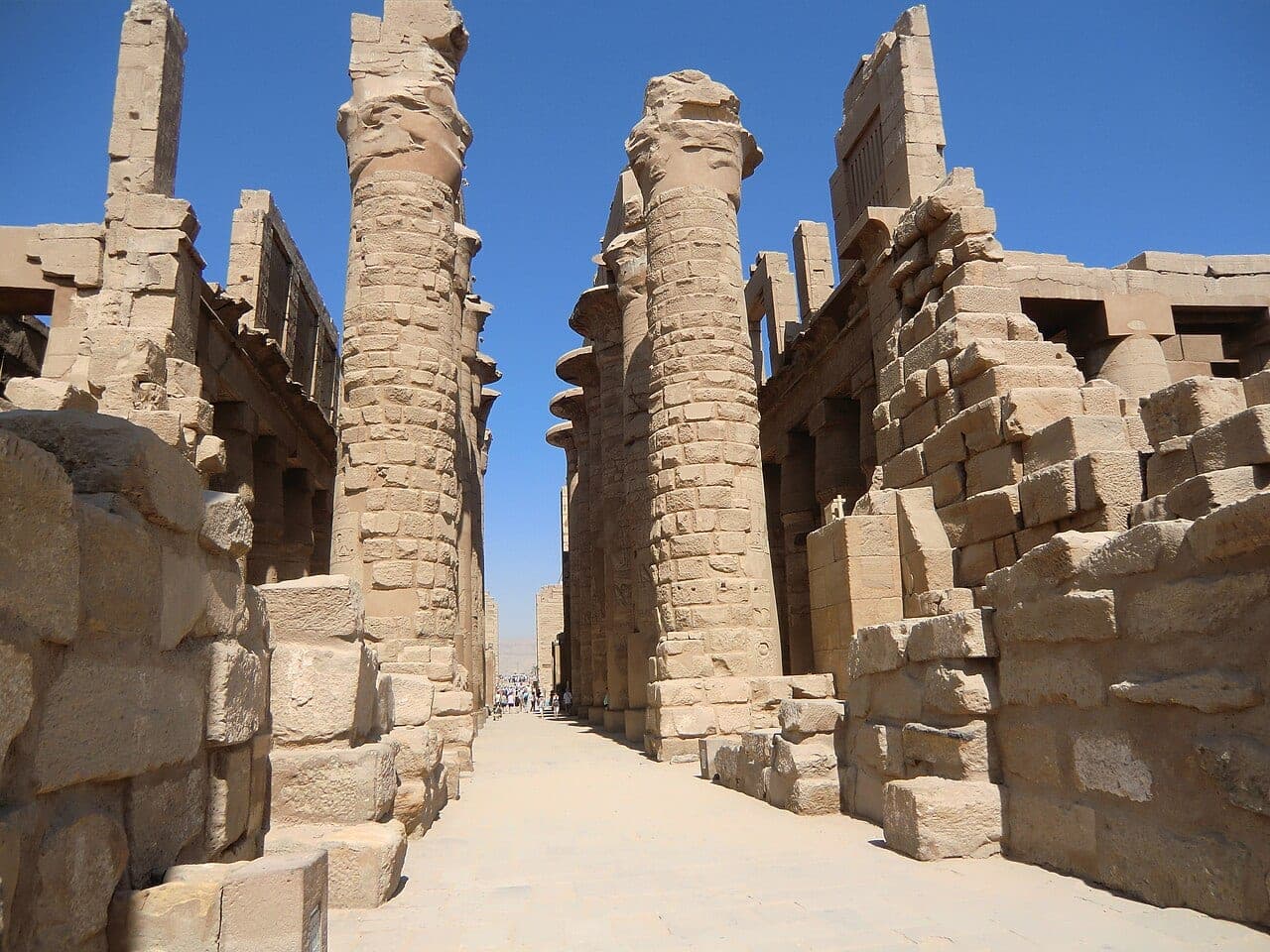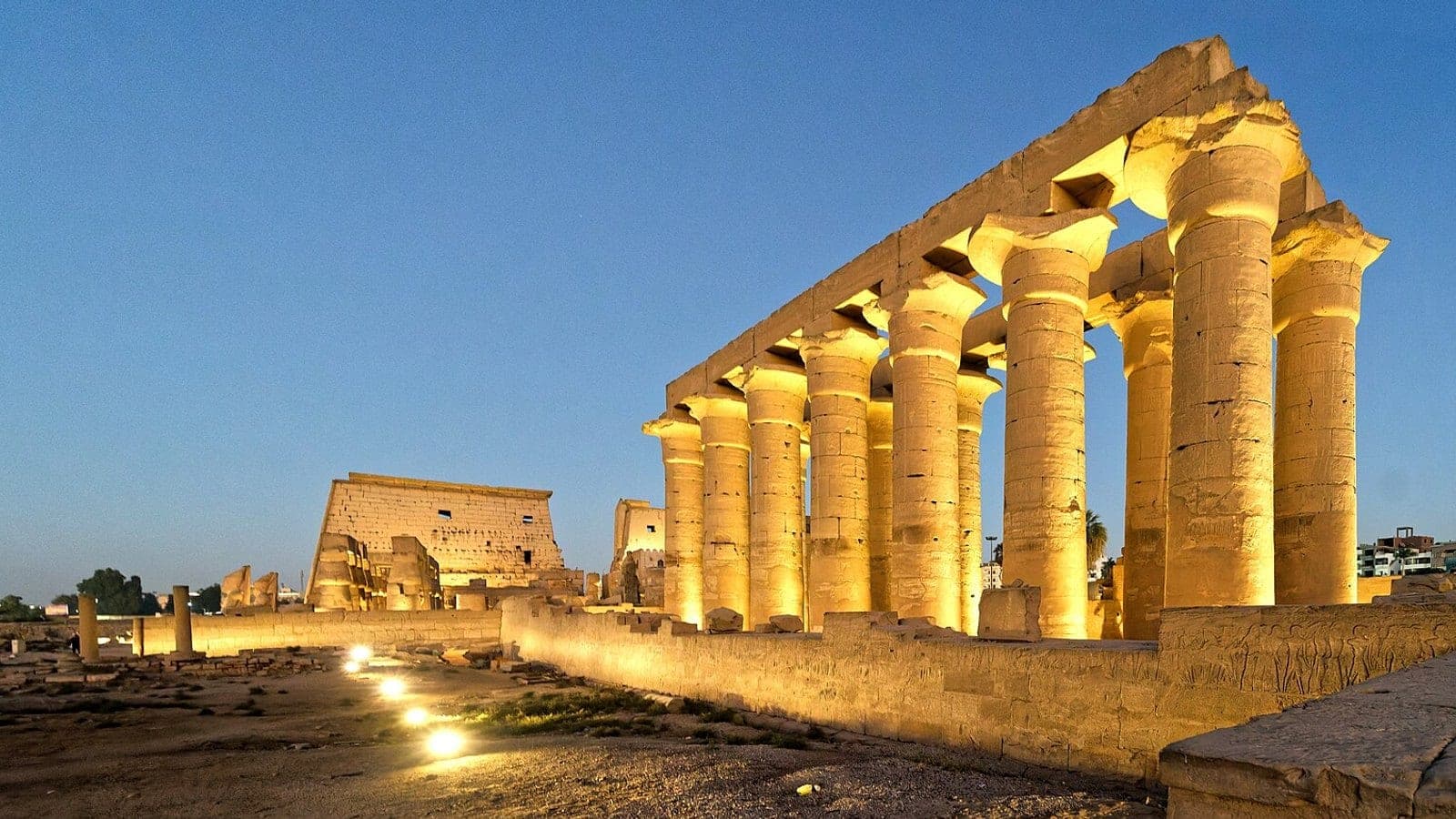
Photo : Tim Adams — CC BY 3.0, Wikimedia Commons
Luxor · West bank
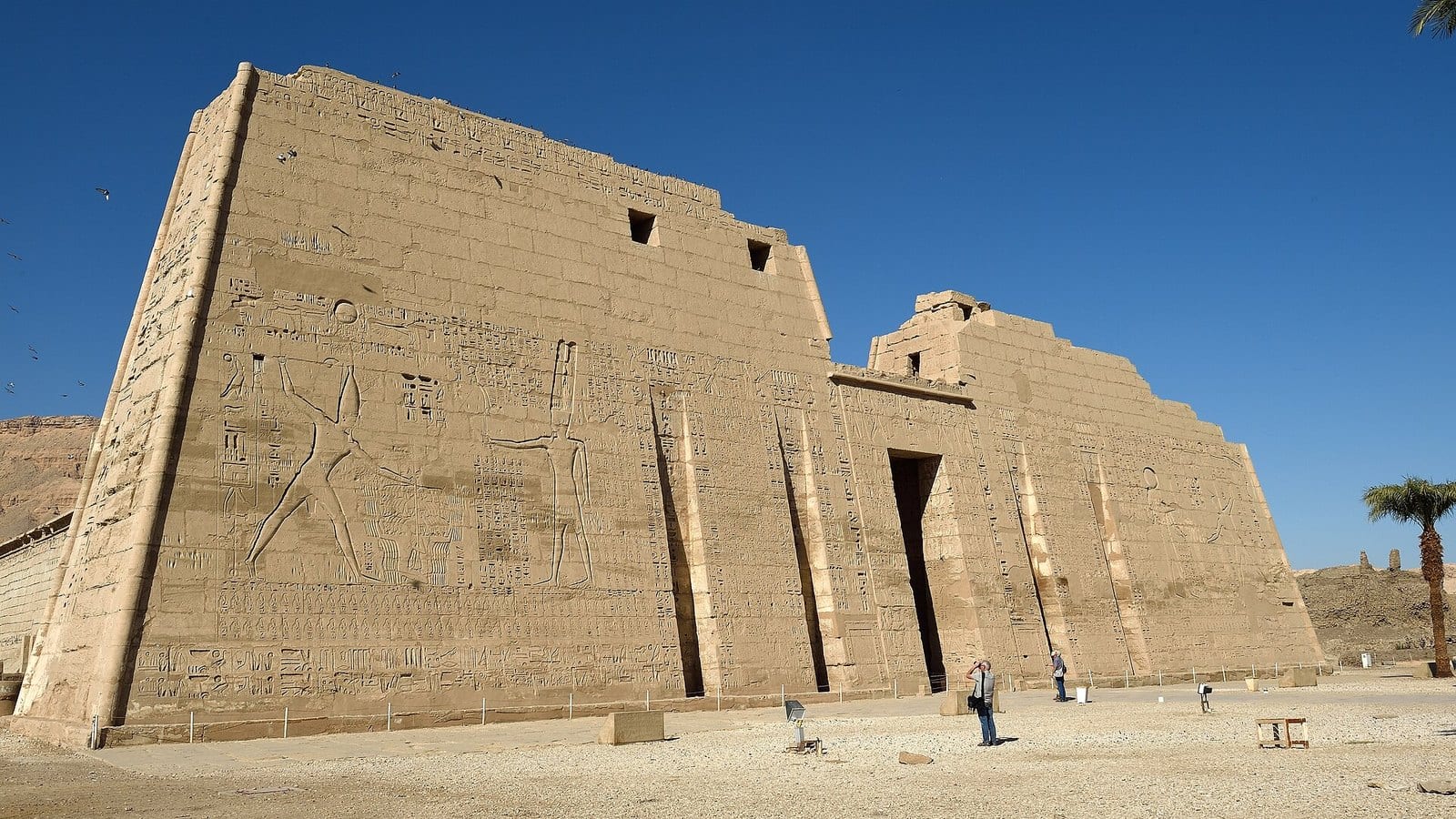
Medinet Habu
The best-preserved temple on the west bank, with colour still clinging to the ceilings.
Ramesses III's funerary temple, Twentieth Dynasty, around 1180 BC. You enter through a migdol, a fortified gate borrowed from the strongholds of Syria, with nothing Egyptian about it. The outer walls carry the account of the war against the Sea Peoples, cut so deep the stone has held for three thousand years of wind — the tally of severed hands included. Inside the same enclosure stands a smaller temple of Amun begun under Hatshepsut, and over all of it lie the traces of Djeme, the Coptic village that occupied the site for centuries.
The extra bit
The inner halls still have their roofs, which means shade and ceilings that have kept their paint: this is the one west-bank site that is bearable in early afternoon.
Know before you go
Allow an hour, more if you look closely at the reliefs. Nothing is explained on site: read up before you come, or bring a guide. It pairs well with the Ramesseum, ten minutes up the road.