Photo : H. Grobe — CC BY 3.0, Wikimedia Commons
Luxor · West bank
The Ramesseum
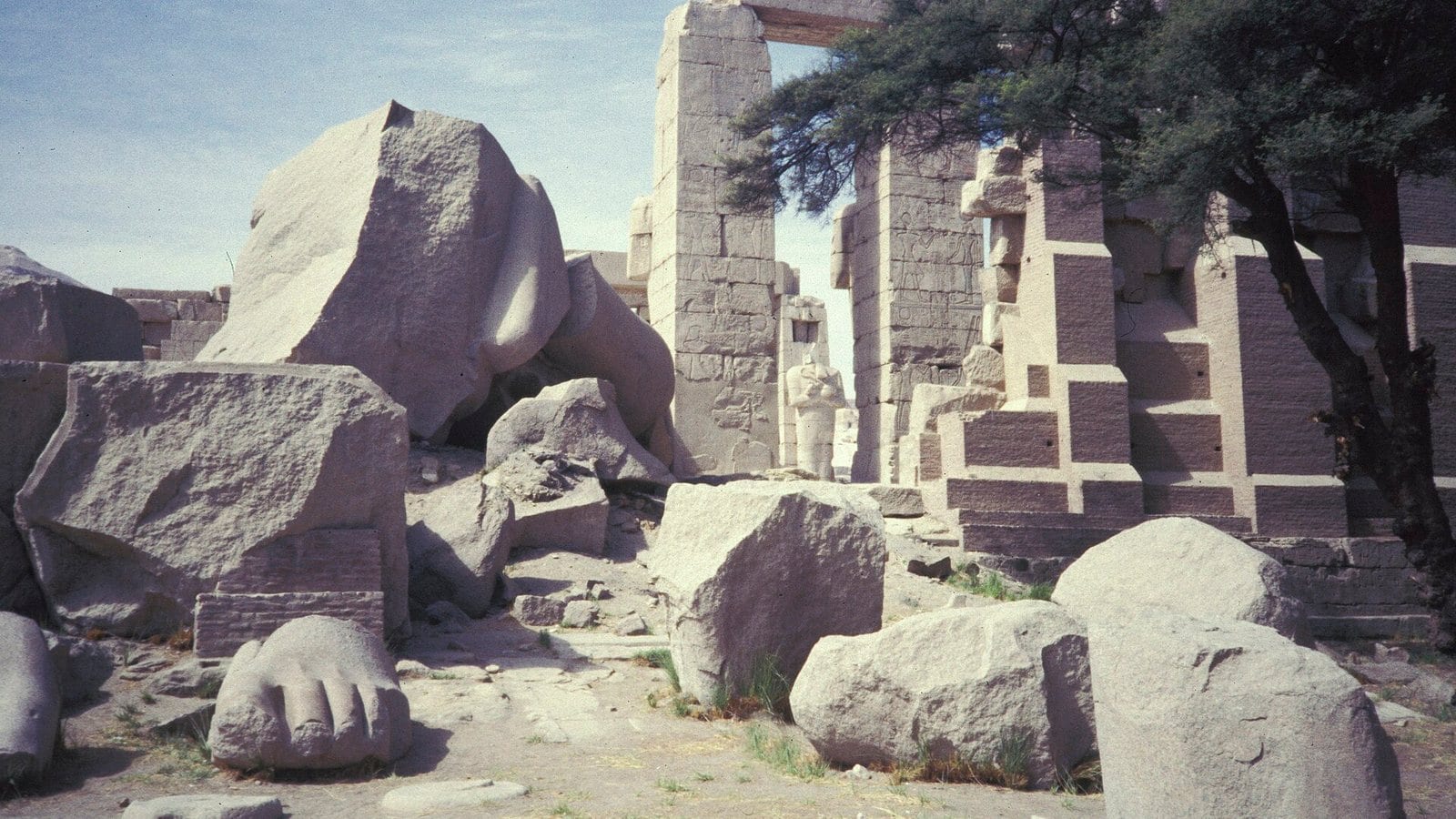
The colossus of Ramesses II lies in pieces in his own courtyard: it is the statue behind 'Ozymandias'.
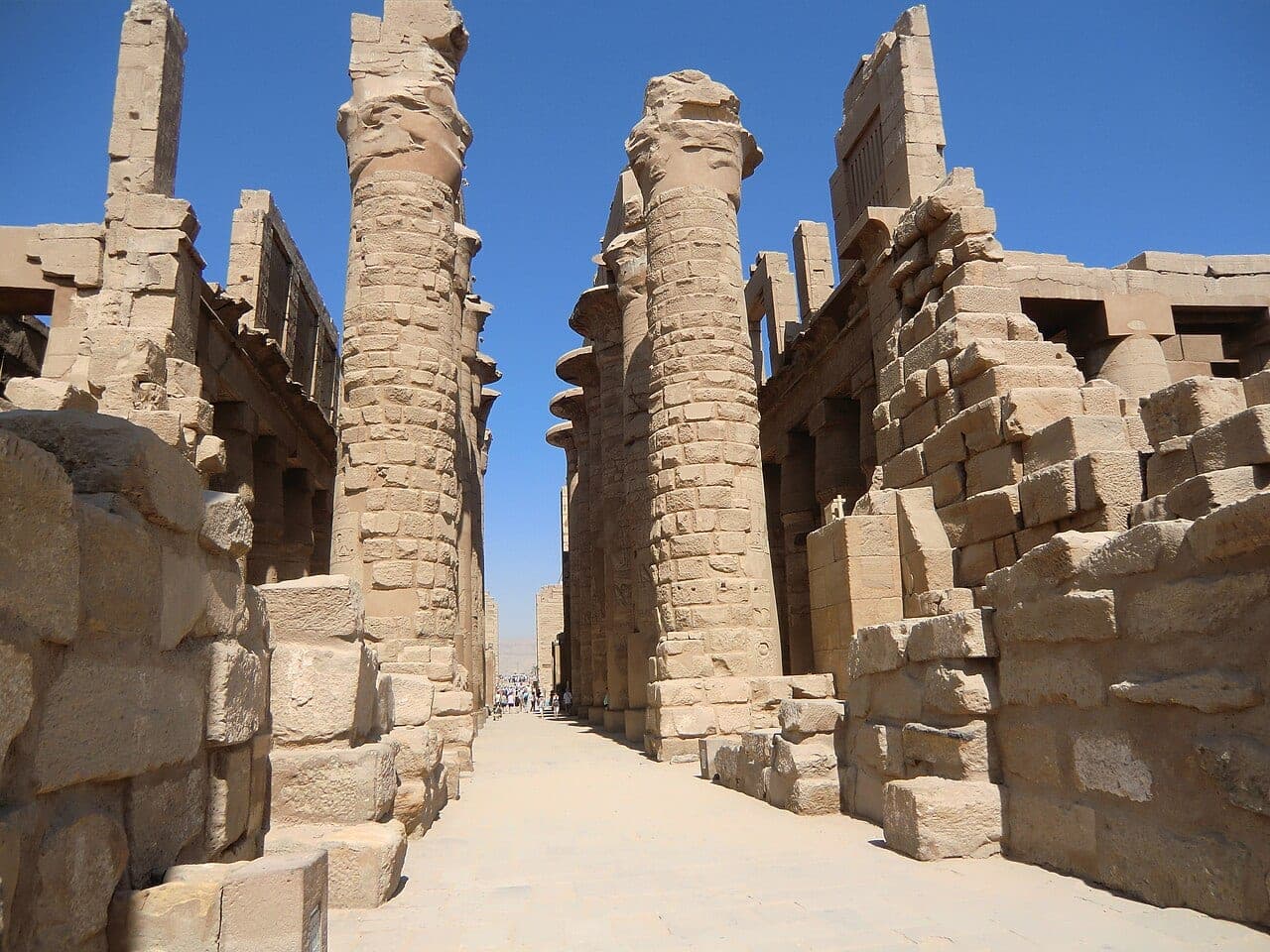
Ramesses II's funerary temple, thirteenth century BC. It is more ruined than its neighbours — the Nile flooded it for centuries — and that is exactly what gives it its character: truncated columns, capitals lying in the grass and, in the middle, the king's colossus collapsed and snapped clean through, one of the largest ever cut from a single block. Diodorus of Sicily described it under the name Osymandyas, from which Shelley took his sonnet, written in 1817 and published the following year, without ever leaving Europe. Behind the temple stand the vaulted mudbrick storerooms, where thousands of ostraca were found: the working drafts of the temple's scribes.
The extra bit
The visit takes three quarters of an hour: this is a site to slot between two big ones rather than a stop in its own right. Walk round behind the hypostyle hall, on the side of the mudbrick storerooms — nobody goes there.
Know before you go
Avoid the middle of the day: the site is low and open, without a wall tall enough to cast shade. It shares its road with Medinet Habu and the temple of Hatshepsut, so the stop costs you no detour, but it is quickly seen and many itineraries skip it — you may have to ask your driver for it by name.