Photo : RThiele — CC BY-SA 3.0, Wikimedia Commons
Giza · Saqqara
Saqqara
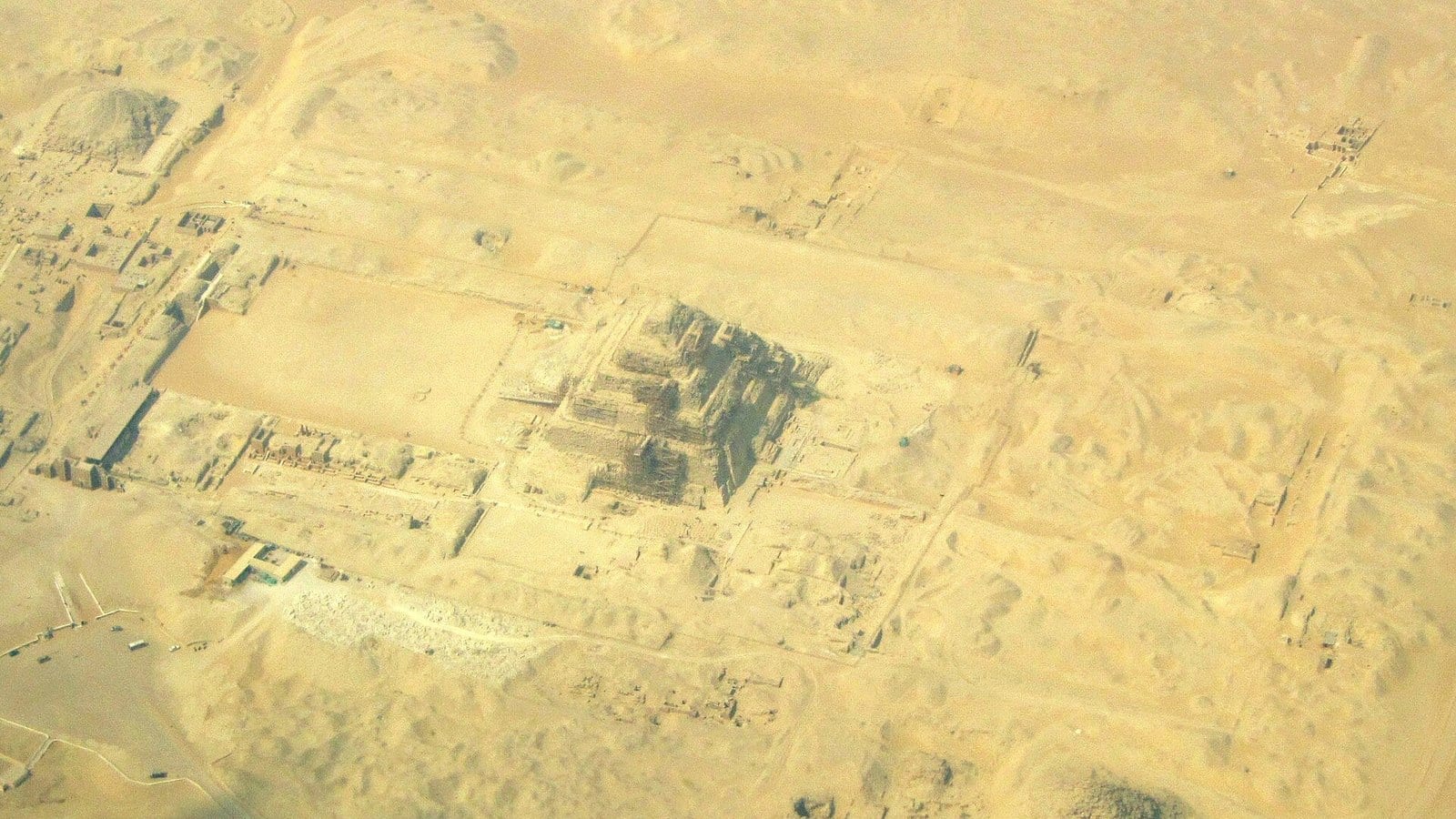
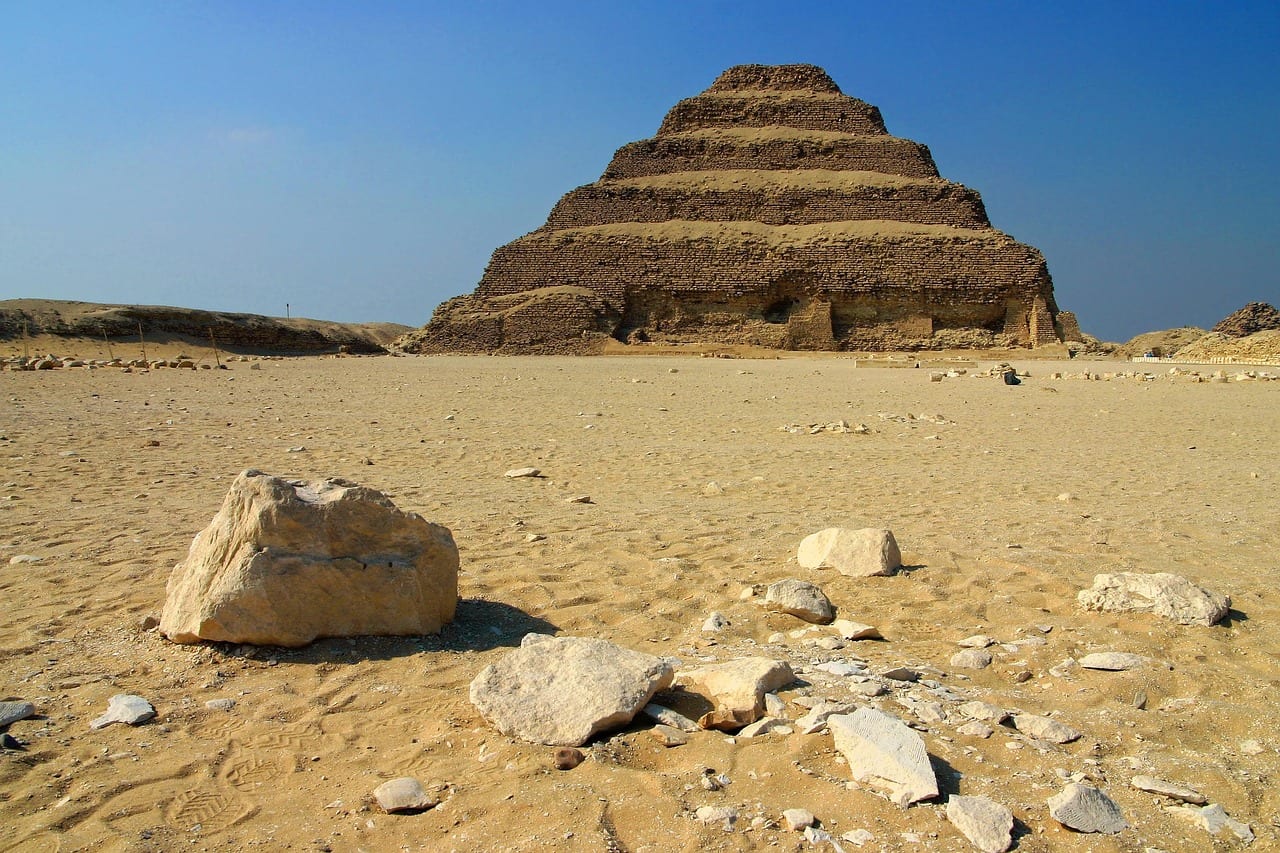
Djoser's step pyramid, the oldest large stone building in the world. Best in the early morning.
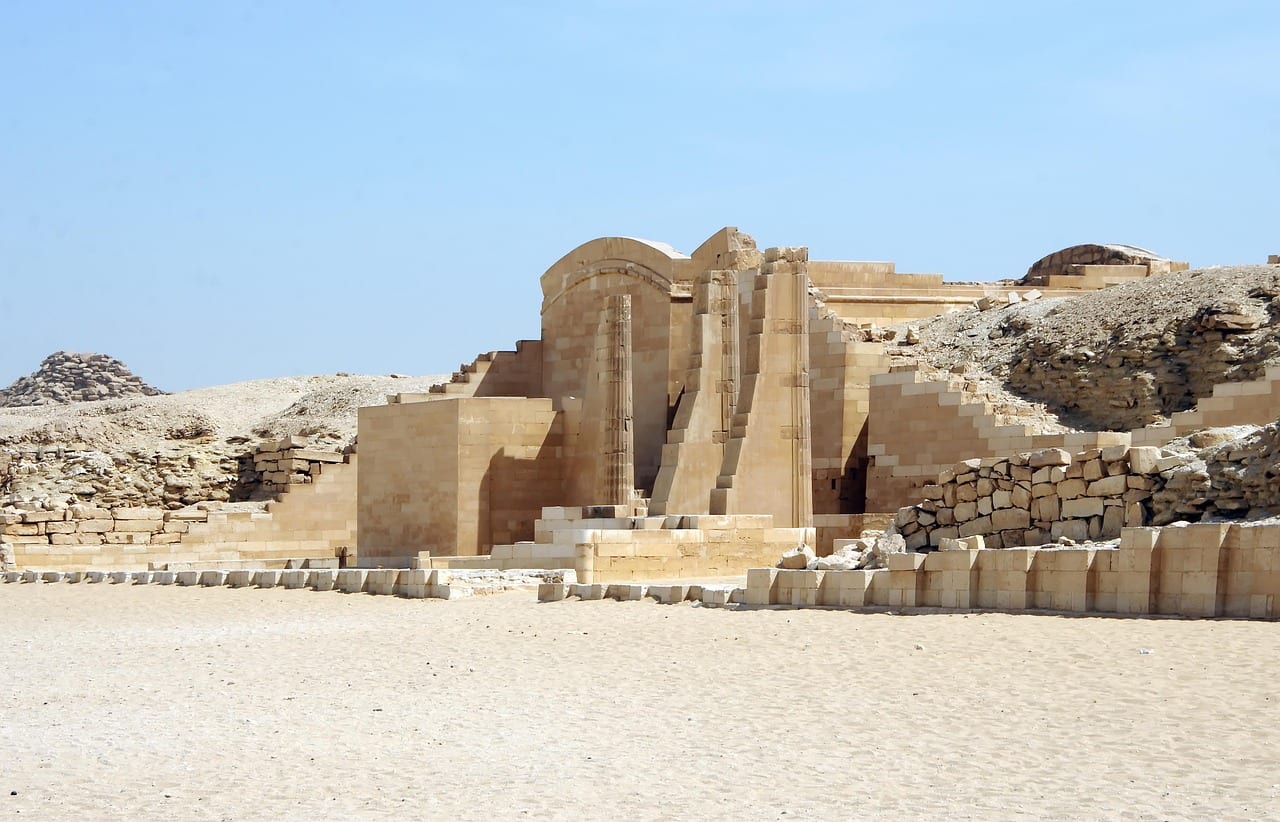
Saqqara is the necropolis of Memphis, in use for more than three thousand years. The step pyramid, raised for King Djoser in the 27th century BC by the architect Imhotep, marks the move from mud brick to cut stone: six stages, a limestone enclosure wall, and the idea of the pyramid beginning here. Around it lie dozens of Old Kingdom tombs, among them the mastabas of Ti and Mereruka, covered with scenes of fishing, harvest and estate accounting that are worth more than most museums. The Serapeum is the underground gallery where the Apis bulls were buried in granite sarcophagi weighing tens of tonnes, and you walk it in the silence of a cellar.
The extra bit
Start with the tombs and leave the pyramid for later: Ti, Mereruka and Kagemni are sometimes closed in rotation, and their reliefs are what you forget last. The Imhotep Museum at the gate takes twenty minutes and hands you the plan of the site before you get lost in it.
Know before you go
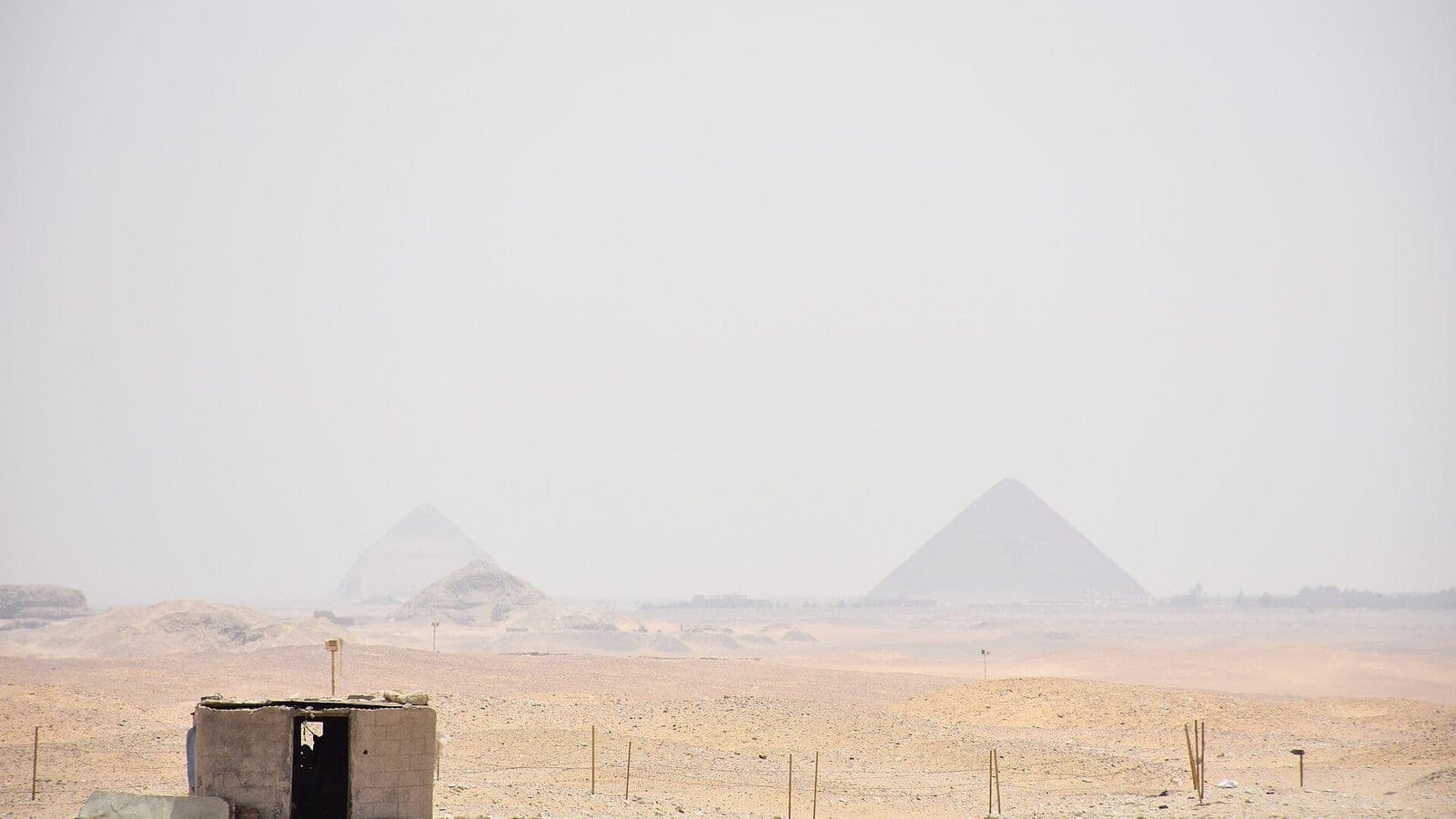
Allow three hours and closed shoes. The car goes no further than the car park, the sand is soft, and there is not a metre of shade from one tomb to the next. Which tombs and which parts of the Serapeum are open follows the conservation work as it moves around the site: what was open in spring may be shut by autumn. Dahshur is on the same road, so keep it for the same day.