Photo : Bilal Detailz — CC BY-SA 4.0, Wikimedia Commons
Giza · Mit Rahina
Memphis
A capital of three thousand years, down to a fallen colossus and an alabaster sphinx. Come warned.
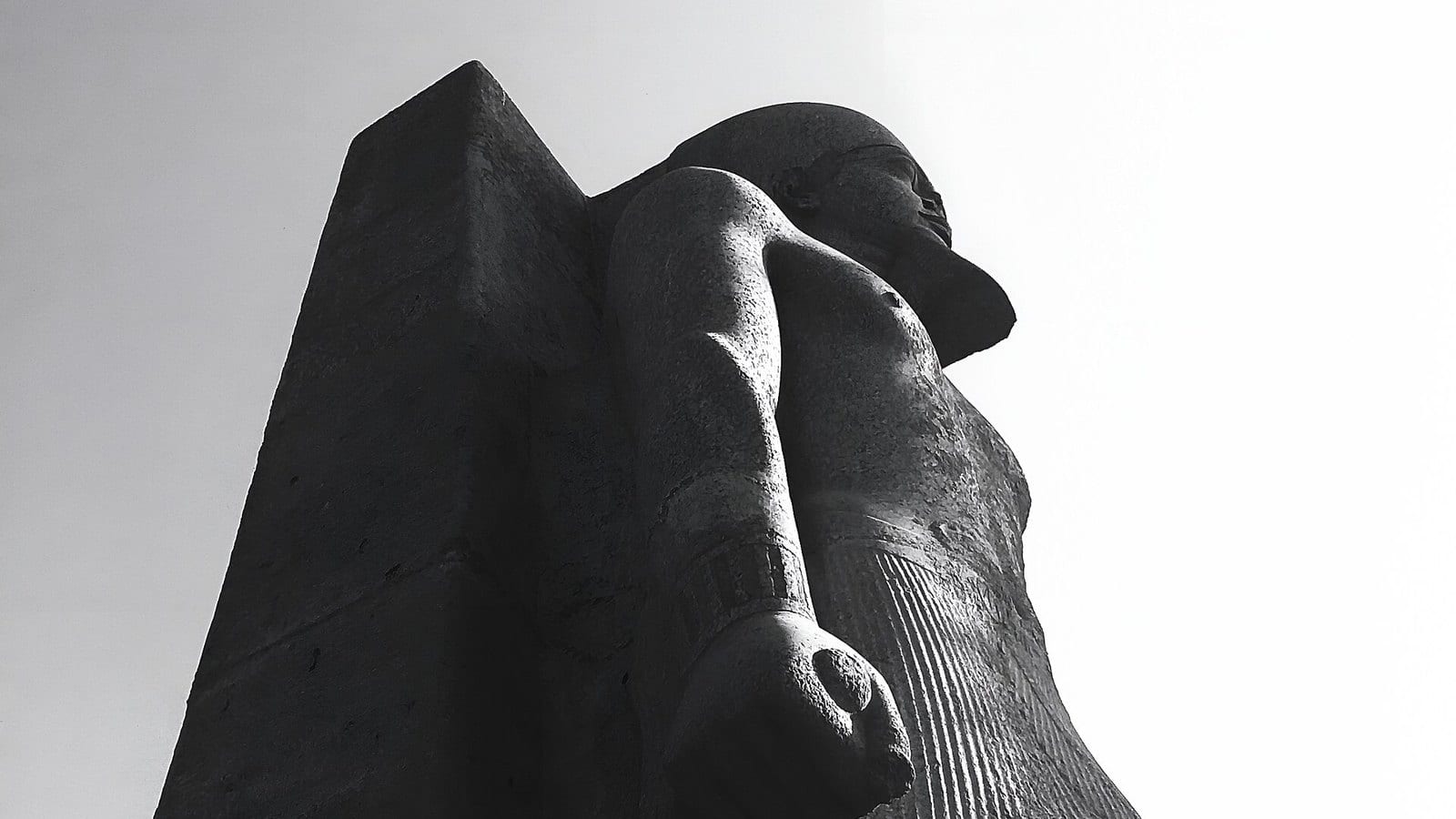
Memphis was Egypt's capital through most of the Old Kingdom, and the name of its great temple of Ptah, Hut-ka-Ptah, gave Greek the word that became Egypt. Almost nothing survives: the city was mud brick, Nile silt buried it, and its stone was carted off to other building sites. What you visit today is a small enclosure at Mit Rahina: a limestone colossus of Ramesses II lying on its back under a shelter, an alabaster sphinx too heavy to have been moved, and a few sarcophagi and stelae lined up in the garden. Thirty minutes is enough, and that is fine.
The extra bit
Look at the colossus from the first-floor gallery before walking round it at ground level: that is where you see the face, and the face is intact.
Know before you go
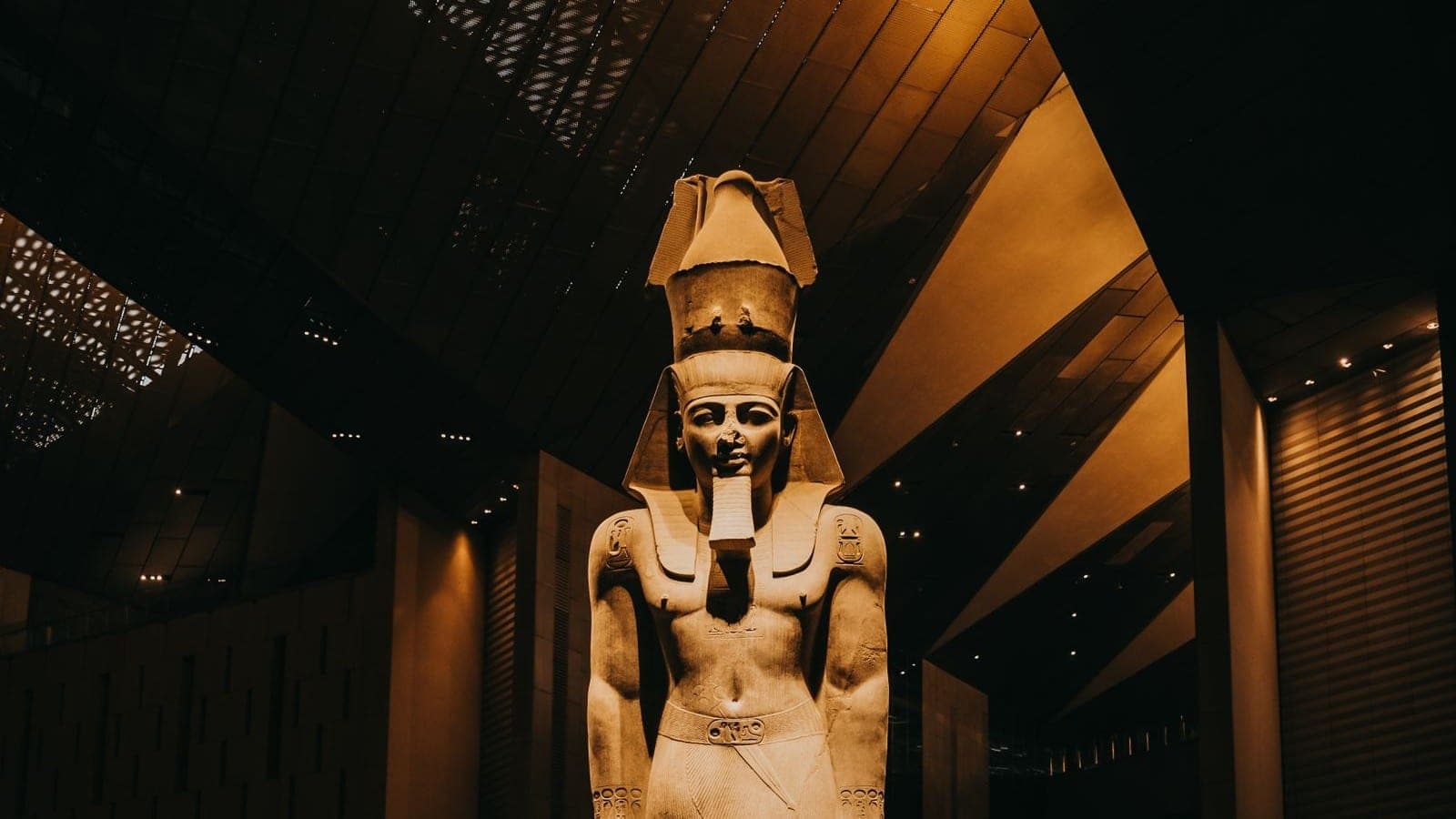
This is not a visit in itself — it is a thirty-minute stop between Saqqara and Dahshur, and a well-meaning driver will sometimes sell it as "Egypt's first capital" without saying what is left of it. The statuette sellers at the exit are persistent. Another colossus of Ramesses, a standing one, is not here: it was moved to the Grand Egyptian Museum on the Giza plateau.